


ICPC Supports Full Implementation of ANEEJ Recommendations for ACTUs Assessment
By:Femi Mustapha
The Independent Corrupt Practices and Other Related Offences Commission (ICPC) has committed to implementing all the recommendations stemming from a recent assessment conducted by the Africa Network for Environment and Economic Justice (ANEEJ) regarding the effectiveness of Anti-Corruption and Transparency Units (ACTUs) across Nigeria’s Ministries, Departments, and Agencies (MDAs).
This commitment was made during a strategic engagement held at the ICPC Headquarters in Abuja, where the ANEEJ delegation, led by Deputy Executive Director Mr. Leo Atakpu, met with ICPC leadership to present key findings and recommendations from its report titled “Assessment of the Effectiveness of ACTUs in Delivering their Mandate.”
Speaking on behalf of the ICPC Chairman, Dr. Musa Adamu Aliyu, SAN, Mr. Olusegun Adigun, the Director of the Systems Study and Review Department, expressed appreciation for the report’s findings and assured the ANEEJ team of the Commission’s readiness to take action. “We deeply appreciate the quality and relevance of this report. It offers practical, evidence-based recommendations. I can confirm that ICPC will implement all of them,” Adigun stated.

He also announced plans to write to the Edo State Government, urging them to establish ACTUs within their MDAs, similar to initiatives taken in Kano and Anambra states. “We will also reach out to the Edo State Government to advocate for the establishment of ACTUs across their MDAs, just as states like Kano and Anambra have already done,” Mr. Adigun added.
In his remarks, Mr. Atakpu emphasized that while ACTUs were intended to serve as internal oversight mechanisms, their effectiveness has been inconsistent, primarily due to inadequate institutional support.
“What this report highlights is not only the existing gaps but also the potential for ACTUs to function as internal checks against misconduct—if they are properly resourced and empowered,” he noted.
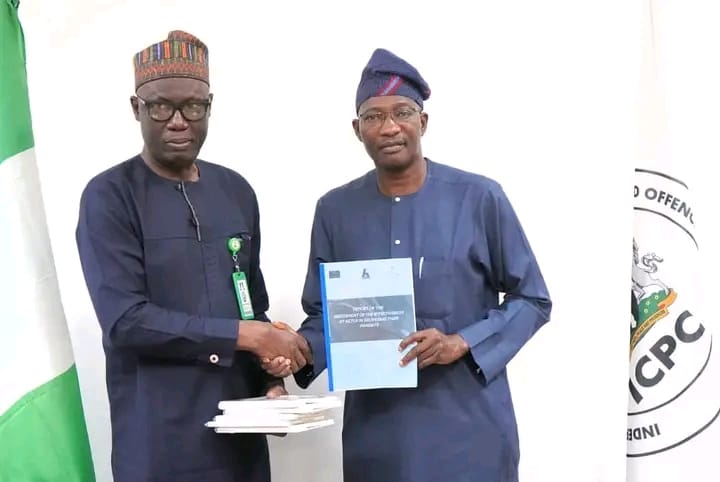
Mr. Atakpu underscored ANEEJ’s ongoing role in strengthening anti-corruption structures, stressing the need to institutionalize ACTUs not just at the federal level, but also in subnational governments.
“We are prepared to support the capacity building of officials in Edo State and work closely with the government to ensure that ACTUs are not only established but also fully operational. We will also assist in the training of 50 ACTUs in MDAs and promote budgetary allocations for ACTU operations across the board,” Atakpu stated.
He concluded by emphasizing that “the role of civil society is not merely to identify gaps, but to offer solutions and recommendations that help strengthen institutions.”
This meeting is part of ANEEJ’s ongoing efforts under the Civil Society Advocacy to Strengthen Anti-Corruption Reforms in Nigeria (CASARN) project, supported by the Rule of Law and Anti-Corruption (RoLAC II) Programme. RoLAC II is implemented by International IDEA with funding from the European Union.


