

By:Femi Mustapha
In Nigeria, a quiet revolution is underway. The Proceeds of Crime (Recovery and Management) Act, enacted in 2022, is a game-changer in the country’s fight against corruption.
This landmark legislation empowers authorities to seize and manage assets acquired through illicit means, sending a strong message to corrupt elites that their ill-gotten gains will no longer be tolerated.
For years, Nigeria has struggled with corruption, with billions of dollars siphoned from the public purse by corrupt officials and their cronies.
The Proceeds of Crime Act is a crucial step towards recovering these stolen assets and ensuring that those responsible are held accountable.
The law provides a framework for the identification, freezing, and forfeiture of assets, as well as the management and disposal of recovered proceeds.
The Economic and Financial Crimes Commission (EFCC), Nigeria’s premier anti-corruption agency, has been at the forefront of implementing the Proceeds of Crime Act.
The agency has made significant strides in recovering stolen assets, with over ₦100 billion (approximately $250 million) in recovered proceeds in the past year alone.
However, the EFCC’s efforts have not been without challenges, as the agency faces resistance from powerful individuals and groups seeking to undermine its work.
One of the key challenges facing the EFCC is the complexity of asset recovery. Many stolen assets are hidden within complex financial structures, making them difficult to identify and recover.
The EFCC has had to develop specialized skills and expertise to tackle these cases, often working with international partners to track down and recover stolen assets.
Despite these challenges, the EFCC has recorded some notable successes. In 2022, the agency recovered over $100 million in stolen assets from a former government official, marking one of the largest asset recoveries in Nigeria’s history.
The recovered funds have been used to finance critical infrastructure projects, including roads, schools, and hospitals.
The Proceeds of Crime Act has also created new opportunities for international cooperation.
Nigeria has signed agreements with several countries, including the United States, the United Kingdom, and Switzerland, to facilitate the sharing of information and the recovery of stolen assets.
These agreements have enabled the EFCC to recover assets hidden in foreign jurisdictions, bringing much-needed revenue back to the country.
However, the implementation of the Proceeds of Crime Act is not without controversy. Some critics argue that the law is being used to target political opponents rather than to genuinely tackle corruption.
Others have raised concerns about the lack of transparency and accountability in the management of recovered assets.
To address these concerns, the EFCC has established a transparent and accountable system for managing recovered assets.
The agency has also established a special task force to oversee the implementation of the Proceeds of Crime Act, ensuring the law is applied fairly and consistently.
As Nigeria continues to grapple with corruption, the Proceeds of Crime Act remains a crucial tool in the fight against this scourge.
The law has sent a strong signal to corrupt elites that their ill-gotten gains will no longer be tolerated and that they will be held accountable for their actions.
With continued support and cooperation from international partners, Nigeria can recover its stolen assets and use them to finance development and improve the lives of its citizens.
The road ahead is not easy, but Nigeria is determined to succeed. The Proceeds of Crime Act is a significant step towards a more transparent and accountable system, and it is a testament to the country’s commitment to fighting corruption.
As the country moves forward, the international community must continue to support Nigeria’s efforts, providing the necessary expertise and resources to ensure the successful implementation of the law.
The debate over Nigeria’s asset recovery and management framework has intensified, with stakeholders divided over plans to restructure the administration of recovered proceeds of crime.
The controversy centers on two bills currently under consideration by the Senate that aim to amend the existing laws governing asset recovery and management.
At the heart of the debate is the question of who should manage recovered assets – the anti-corruption agencies or a dedicated, independent body.
The Attorney General of the Federation and Minister of Justice, Lateef Fagbemi SAN, has advocated the establishment of a distinct, institutionalized body solely responsible for the management and utilization of recovered assets. Fagbemi’s stance is driven by the need to enhance operational efficiency and strengthen the overall effectiveness of the Proceeds of Crime Act.
However, representatives of the Economic and Financial Crimes Commission (EFCC) and the Independent Corrupt Practices and Other Related Offences Commission (ICPC) have expressed reservations about the proposal, arguing that removing asset management functions from their remit could weaken their institutional authority and undermine their effectiveness in combating corruption.
According to them, monitoring, investigation, seizure, asset tracing, and management are integral components of their statutory mandates.
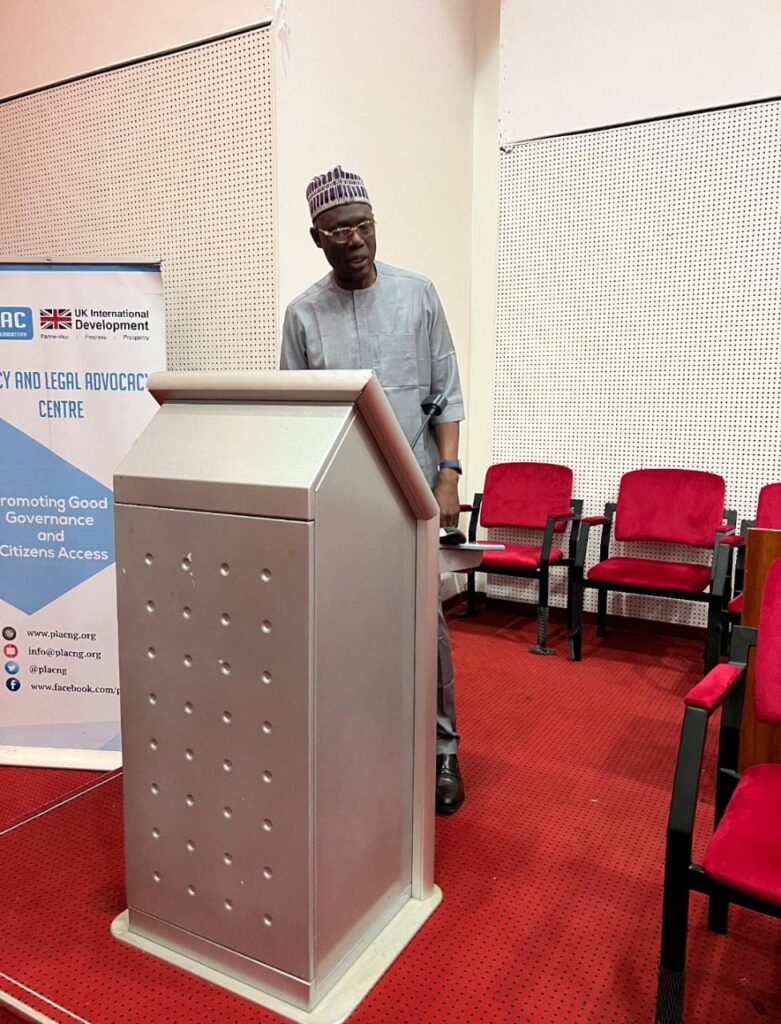
Dr. Atakpu Leo, Deputy Executive Director of the Africa Network for Environment and Economic Justice (ANEEJ), has called for accountability-centered reform, emphasizing that any new or restructured asset management framework must embed strong accountability mechanisms proportionate to the authority conferred.
“Nigeria’s asset recovery regime is plagued by fragmented asset management, weak inter-agency coordination, and inconsistent asset preservation standards,” Dr. Atakpu said. “We need a system that prioritizes transparency, accountability, and public confidence.”
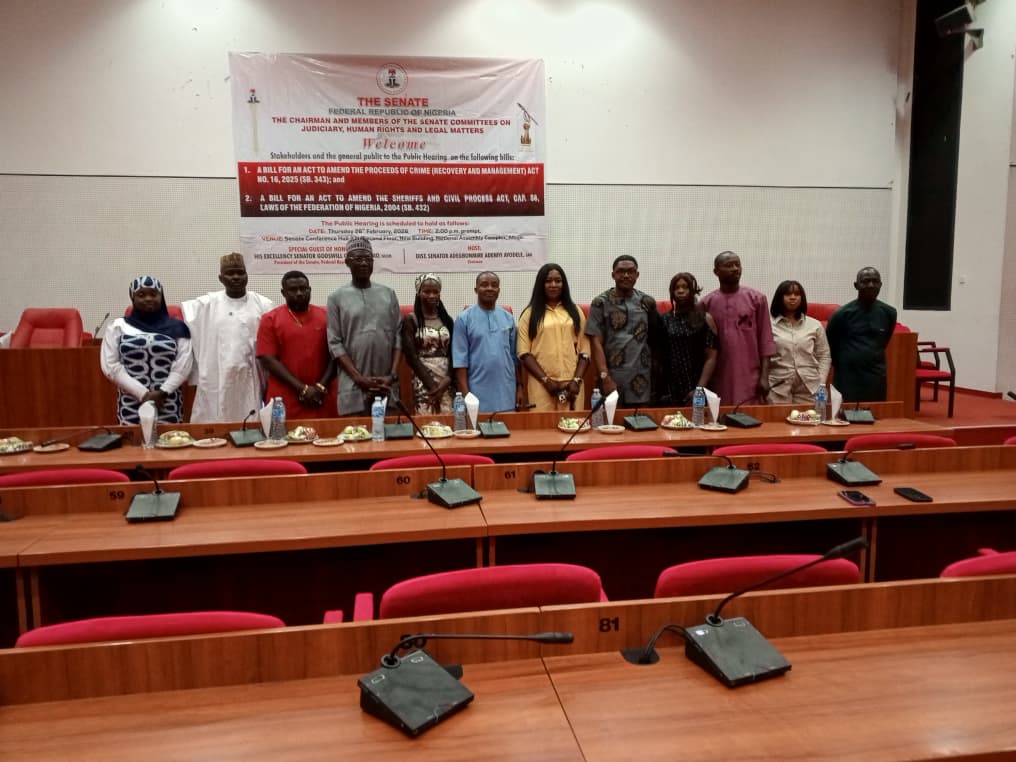
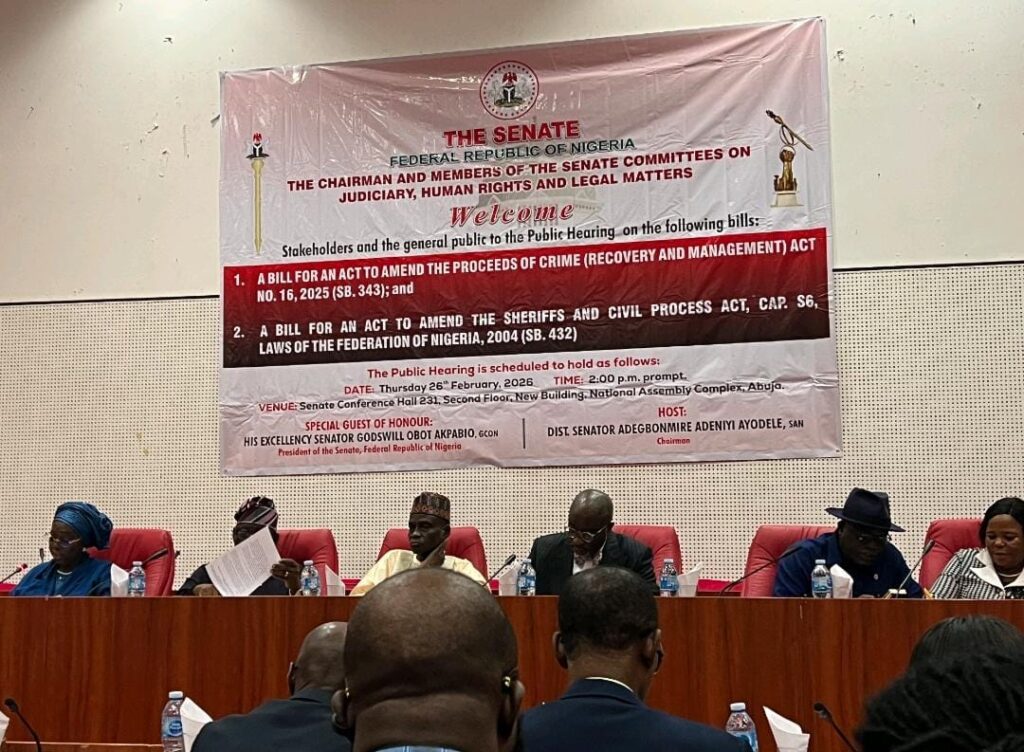
The public hearing, convened by the Senate Committee on Judiciary, Human Rights and Legal Matters, brought together over 70 stakeholders, including representatives of the Federal Ministry of Justice, anti-corruption agencies, civil society organizations, and academia.
The call for reform is not new, but the current debate highlights the deep-seated challenges facing Nigeria’s asset recovery efforts.
The country’s anti-corruption agencies have been accused of lacking transparency and accountability in their operations, and there are concerns that a dedicated asset management body could face similar criticisms.
The public hearing, convened by the Senate Committee on Judiciary, Human Rights and Legal Matters, brought together over 70 stakeholders, including representatives of the Federal Ministry of Justice, anti-corruption agencies, civil society organizations, and academia.
Senator Adeniyi A. Ayodele, Chairman of the Senate Committee, stressed that laws must evolve to meet the needs and aspirations of citizens in a democratic society.
He urged participants to rise above partisanship and personal interests in their deliberations.
The Senate President, Godswill O. Akpabio, represented by the Chief Whip of the Senate, Tahir Monguno, emphasized that legislative reforms must be guided by sound principles, informed by professional expertise, and driven by the overarching national interest.
As the debate continues, one thing is clear – Nigeria’s asset recovery and management framework is at a crossroads. The question is, which path will the country choose?
The outcome of this debate will have far-reaching implications for Nigeria’s fight against corruption and its efforts to recover stolen assets.
It remains to be seen how the Senate will ultimately resolve this issue, but one thing is certain – the stakes are high, and the country is watching.


