

From: Femi Mustapha
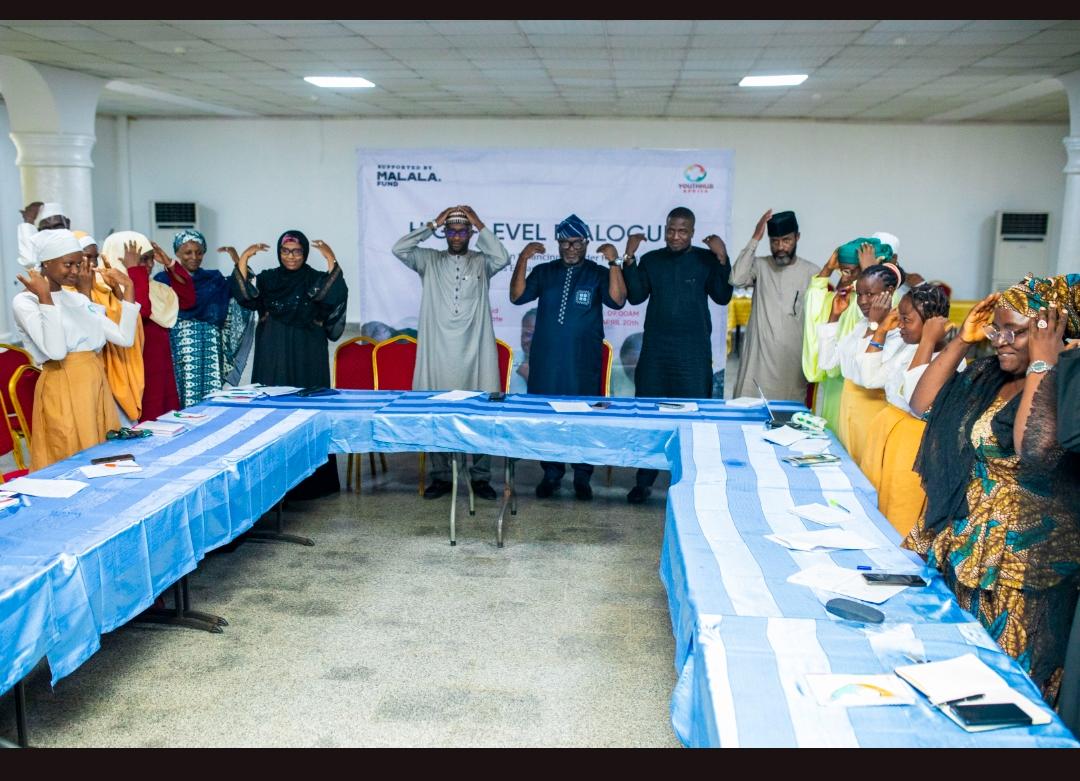
YouthHubAfrica, supported by the Malala Fund, held a High-Level Dialogue on Monday in Kaduna to promote education funding, gender responsiveness, and citizen engagement in budgeting. Stakeholders urged the concrete implementation of policies to ensure that every naira provides equitable benefits for girls and boys.
The dialogue brought together key stakeholders from the Kaduna State Government, the State House of Assembly, the Ministry of Education, civil society, development partners, and the media.
It provided a strategic platform to examine ongoing gaps in education funding, transparency, oversight, and inclusiveness, while mobilizing collective action for a more equitable and accountable education system.
Stakeholders reiterated that improving access, quality, and equity in education requires not only policy commitments but also actual implementation and sustained political will.
Discussions focused on ensuring the timely and sufficient release of education funds; institutionalizing gender-responsive budgeting to meet the needs of girls and vulnerable learners; strengthening legislative oversight to guarantee value for money; and increasing citizen participation, especially youth voices, in budget planning and monitoring.
Participants recognized the recent approval of the Gender in Education Policy and the Life Skills Policy as important milestones.
However, they emphasized the need to go beyond policy approval and work toward full, effective implementation in schools and communities.
Gbemisola Joel-Osoba, Partnership Manager at Malala Fund, delivered a goodwill message, praising Kaduna State for showing increasing political will to improve education outcomes, supported by one of Nigeria’s strongest education financing systems.
She highlighted YouthHubAfrica’s budget review, which shows the state allocated an average of 26.8% of its annual budget to education from 2015 to 2025, exceeding UNESCO’s 15–20% benchmark.
She also commended the government for launching its gender-responsive education policy last week, describing the prioritization as commendable. “But policy launch alone is not a destination,” she said.
Joel-Osoba pointed out that the same analysis reveals over 90% of Kaduna State’s capital education budget lines are classified as gender-neutral, and dedicated allocations to girls’ schools disappeared entirely in 2023, 2024, and 2025.
For policy commitments to produce lasting results for girls, she said, they must be reflected not only in sector plans but also in the budgets that fund them and the oversight mechanisms that hold them accountable.
“Today’s gathering is a powerful sign that Kaduna is ready to move beyond policy intent toward fiscal action,” she added.
She praised YouthHubAfrica for ensuring that education sector plans and budgets are gender-responsive and citizen-inclusive through civic engagement, capacity-building, and government accountability efforts that create spaces for communities, especially girls and women, to be seen and heard in budget processes.
Emphasizing that gender-responsive education financing is essential—not a luxury—Joel-Osoba noted that budgets ignoring specific barriers girls face—such as inadequate WASH facilities, unsafe transportation, too few female teachers, and lack of re-entry pathways—risk increased spending without improving outcomes for the most vulnerable girls.
Malala Fund, she said, urges Kaduna State’s legislators and education leaders to champion gender-responsive budgeting as a tool for accountability that guarantees every naira spent on education has an equitable impact for girls and boys alike.
“Moving from policy to reality requires your leadership, your oversight, and your commitment to asking not just how much is being spent, but whether it is reaching those who need it most,” she said.
She reaffirmed Malala Fund’s dedication to supporting this process and collaborating with YouthHubAfrica and partners in Kaduna State to build an education system that is planned, funded, and governed with every child in mind, especially girls.


