

From: Femi Mustapha
The Islamic Development Bank, Global Partnership for Education, UNICEF, and Save the Children have thrown their weight behind Kaduna State’s bid to return children to class, commending progress under the Reaching Out-of-School Children (ROOSC) project during a joint supervision mission this week.
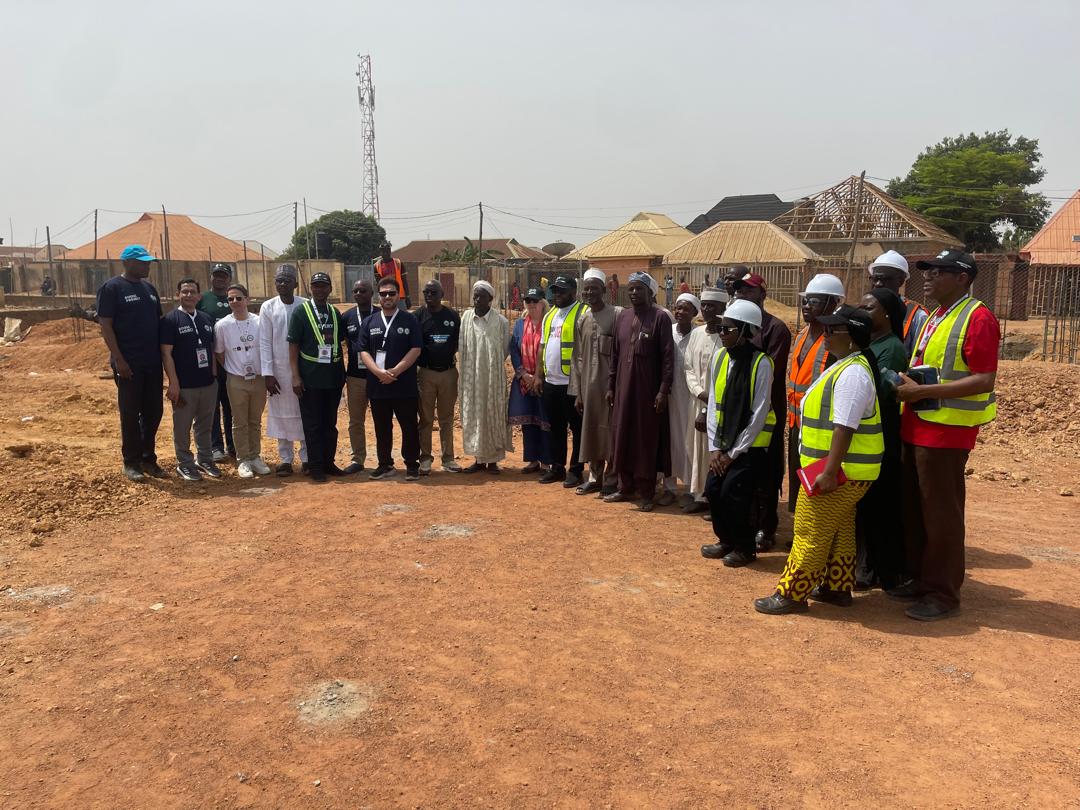
The global partners expressed satisfaction with implementation after site visits to new construction and renovation projects aimed at re-enrolling 100,000 children in school within four years, noting that civil works, community mobilization, and system strengthening are advancing across the state.
Project Coordinator for ROOSC in Kaduna State, Ezra Angai, said partners from around the world gathered in Kaduna to oversee, inspect, and discuss implementation, evaluate progress, ask questions, and troubleshoot challenges. He described the interactions during field visits as “very, very robust” following sessions and presentations on project delivery.
Angai noted that the Islamic Development Bank sent a large delegation, while the Global Partnership for Education, Save the Children International, and UNICEF participated face-to-face. The Federal Ministry of Education and the Federal Ministry of Finance, through the International Economic Relations Department, also sent sizable delegations, with the Kuwait Fund for Arab Economic Development and Education Above All joining online.
He added that the mission was inaugurated by the Commissioner of Education, who reaffirmed the Kaduna State Government’s commitment, under Governor Uba Sani, to ensure that education reform delivers concrete benefits for the people.
At Kwana Bishara in Rigasa, the team inspected an ongoing primary school project with nine classroom blocks — one block of three classrooms and a two-story building with six classrooms — plus an administrative building, wash facilities, and toilets. Angai emphasized that the community initiated the project through a letter, which has now “come to life,” and was present to speak highly of it.
“We’re happy, and we’re thankful first of all to the government of Kaduna State and then to all our partners who have shown great commitment to this project,” Angai said, restating the Project Management Unit’s dedication to completing the project on time and within scope.
Jawara Gaye, Lead Education Specialist at the Islamic Development Bank, expressed satisfaction with progress toward enrolling out-of-school children, retaining them, and providing quality education. “I think it is working,” he said, noting good attendance at the first school visited, with teachers supported by Save the Children and UNICEF.
Gaye commended the enthusiasm of communities where schools previously did not exist and highlighted the importance of progress on civil works. He thanked stakeholders, especially communities, for mobilizing children to attend school, and he appreciated the Kaduna State government for creating an environment in which partners could participate in national development.
Dorian Gay from the Global Partnership for Education said it was an honor to be part of the supervision mission for the ROOSC project, implemented by the Kaduna State government with stakeholder support. At Maichibi, where six classrooms are being added to eight functional ones, he observed 550 students currently in eight classrooms — about 70 per class — and expects the renovation to reduce that to around 40.
He expressed hope that the improved ratio will help staff deliver higher-quality education for boys and girls. He noted the “very deep and proactive engagement” of Kaduna authorities in reforming the sector. Gay said partners are working on multiple fronts: building and renovating schools, providing facilities, strengthening teacher capacity, and supplying learning materials.
Deputy Project Coordinator Hassan Abdul said contractors at Maichibi 1 are ahead of schedule and expressed confidence that quality work will be completed on or before the deadline.
Jane Mbagi Mutua, Deputy Country Director of Save the Children International, said the team saw “great work” at new construction sites, renovation projects, and efforts to integrate children into formal public schools. While the project targets 100,000 children, she noted that nearly 200,000 have been identified as out of school, calling the effort a “drop in the ocean,” but remaining hopeful of completion by September.
Mutua urged communities to send children to school, calling education “the best that we can give” and “a form of protection.” She appealed for cooperation to enroll children, keep them in school, and ensure they are learning, adding that Save the Children is both implementing and funding part of the program.
Vanessa Lee, Chief of Education for UNICEF Nigeria, said UNICEF is delighted to be involved in ROOSC in Kaduna. UNICEF’s focus, she explained, is strengthening systems — enrolling out-of-school children, enhancing teacher capacity, working with School-Based Management Committees, developing a digital tracking system, and collaborating with the state Ministry of Education on finance and planning.
Community leader Muhammad Kabir Usman of Kwana Bishara, Rigasa, described the project as wonderful and thanked Governor Uba Sani for the nine-classroom and administrative block project.
He said children previously traveled 3 to 5 kilometers to school, but the new school has reduced their “wahala” and hard headlines, and they thanked IsDB, UNICEF, and all partners. “I am very happy to be among those who saw this project come to life. I believe history will never forget my name,” he said.


