


From: Femi Mustapha
The Kaduna State Government has encouraged the organized private sector to support the enrollment of poor and vulnerable residents into the state’s health insurance scheme, as part of efforts to accelerate Universal Health Coverage.
During a one-day dissemination of advocacy briefs to the private sector by the Kaduna State Contributory Health Management Authority, KADCHMA, the Honorable Commissioner of Health said the meeting was crucial as the state moves toward Universal Health Coverage under Governor Uba Sani.
“While we have made notable progress, one major challenge remains, which is ensuring that the poor and vulnerable populations have access to quality and affordable healthcare,” the commissioner said.
She pointed out that the government alone cannot reach the required scale, emphasizing the vital role of the organized private sector.
The commissioner urged private sector players to explore practical ways to partner, especially through Corporate Social Responsibility, to support enrollment of vulnerable populations in health insurance.
“Together, we can reduce financial hardship, improve access to care, and save lives,” she added.
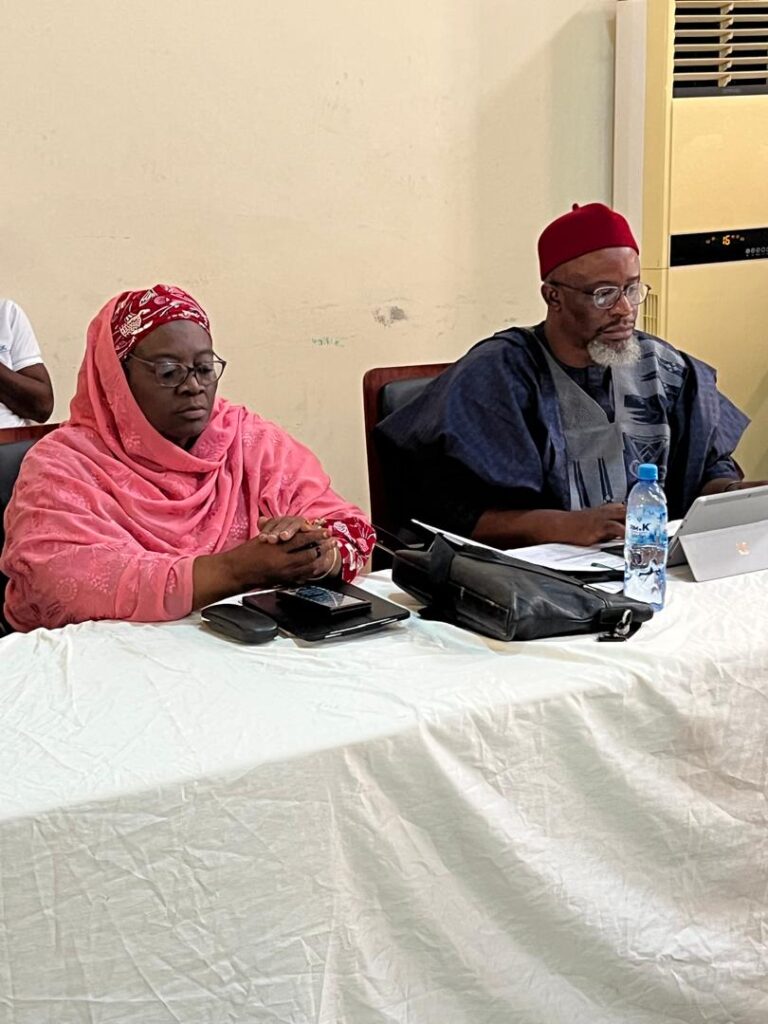
Providing an update on the scheme, the Director General of KADCHMA, Mallam Hassan Abubakar, disclosed that over 700,000 individuals from the formal, informal, and organized private sectors have been successfully enrolled since operations started.
He stated that these beneficiaries are receiving quality healthcare services at accredited facilities, contributing to better health outcomes across the state.
However, the DG highlighted low enrollment from the informal sector as a critical gap. “This is especially concerning because this segment makes up the largest part of our population. Without significant participation from this group, achieving Universal Health Coverage will remain difficult,” Abubakar said.
He called for a change in strategy, noting that barriers to enrollment include lack of awareness, cost issues, irregular income, mistrust, and access problems.
Abubakar stressed the importance of innovative and flexible financing models, community-based enrollment methods, and stronger partnerships among government, the private sector, and development partners.
He appreciated partners like the Clinton Health Access Initiative, CHAI, for their technical support in organizing stakeholder engagement. He also referenced the governor’s directive urging the organized private sector to enroll in health insurance, calling it a strong policy foundation for state efforts.
Delivering a goodwill message, Asma’u I Mora, representing the Executive Chairman of the Kaduna State Internal Revenue Service, Jerry Adams, said sustainable healthcare financing is essential to achieving universal health coverage.
“Strengthening collaboration between public institutions and the organized private sector is key to expanding the reach and effectiveness of health insurance schemes,” she said.
Speaking on behalf of CHAI, Nedam Prince Dumlesori said the goal was to strengthen those in need and support those who are steadily struggling to access necessary healthcare services. “We are referring to the vulnerable population in Kaduna State,” he explained.
Dumlesori explained that the aim is to involve individual and organizational contributions to enroll people who find it hard to access healthcare into the health insurance program. He added that this could lead to fewer neonatal deaths, maternal deaths, and illnesses.
“If these people face health issues, how do they survive? Only through a platform that subsidizes or provides the needed support for accessing healthcare can this be solved,” he said. He also mentioned that CHAI partnered with KADCHMA through March to support enrollment and funding for facilities that serve vulnerable populations.
Additionally, Jafaru Yusuf of the National Association of Proprietors of Private Schools, NAPPS, described the scheme as proof of Governor Uba Sani’s commitment to making citizens healthier through affordable, quality healthcare.
“We hope for a future where our students are enrolled in this program. We would appreciate it if this initiative gets the attention it deserves so that our children can access affordable healthcare,” Yusuf said.
Stakeholders agreed that reaching Universal Health Coverage needs teamwork, shared responsibility, and ongoing dedication. They promised to stay involved and work actively to develop solutions so that no one in Kaduna State is left behind.


