

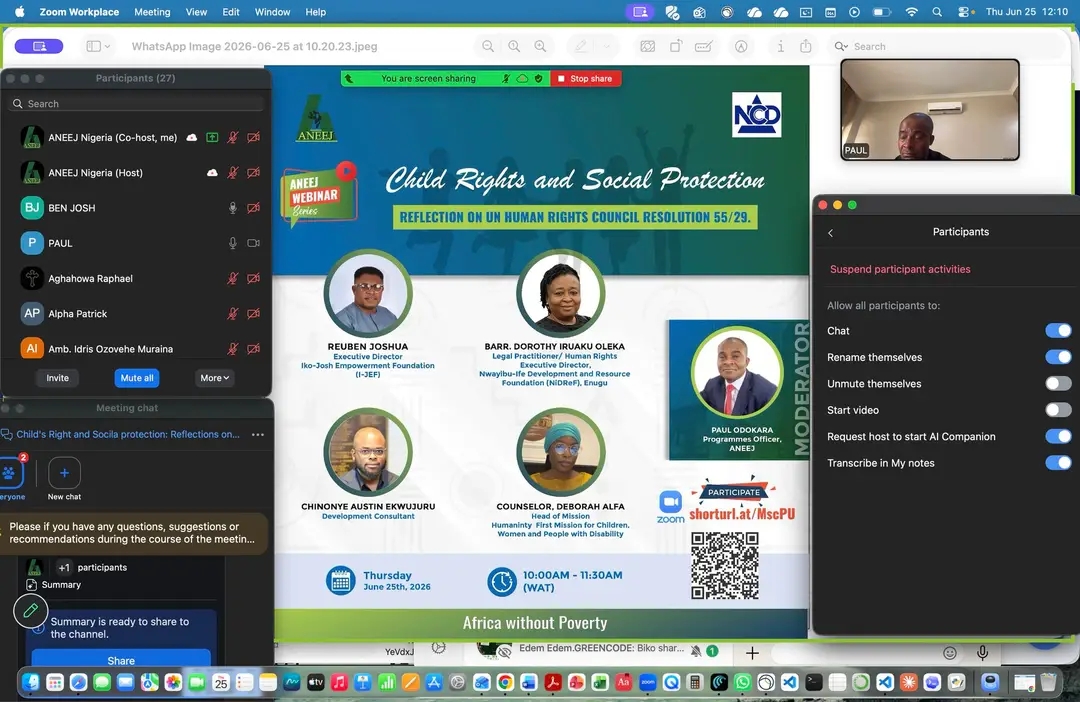
ANEEJ, Experts Call for Stronger Action on Child Rights, Social Protection at Webinar on UN Resolution 55/29
From: Femi Mustapha in Kaduna
The Africa Network for Environment and Economic Justice (ANEEJ) organized a webinar on child rights and social protection in Nigeria, during which experts warned that weak enforcement, funding shortages, and corruption continue to undermine the country’s legal protections for children.
The online session, moderated by ANEEJ ActNaija FCT Programs Officer Paul Odokara, focused on the United Nations Human Rights Council Resolution 55/29 and brought together key stakeholders to identify gaps in Nigeria’s child protection and social welfare systems.
Opening the event, ANEEJ Executive Director Rev. David Ugolor, with remarks delivered by Paul Odokara, set the tone for discussions on improving safeguards for children.
Panelists included Councilor Deborah Alpha, Head of Mission, Humanity First Mission for Children, Women, and People with Disabilities; Barrister Dorothy Iruaku Oleka, Legal Practitioner/Human Rights Advocate and Executive Director, Nwayibu-Ife Development and Resource Foundation (NiDRef), Enugu; Mr. Ruben Joshua, Executive Director, Iko-Josh Empowerment Foundation (I-JEF); and Mr. Chinonye Austin Ekwujuru, Development Consultant.
Discussions pointed out several serious threats to children’s rights in Nigeria, such as poverty, insecurity, cultural barriers, gender discrimination, and child marriage. While participants agreed that Nigeria has a strong legal framework for child protection, they emphasized that enforcement remains weak due to limited funding, institutional capacity, and corruption.
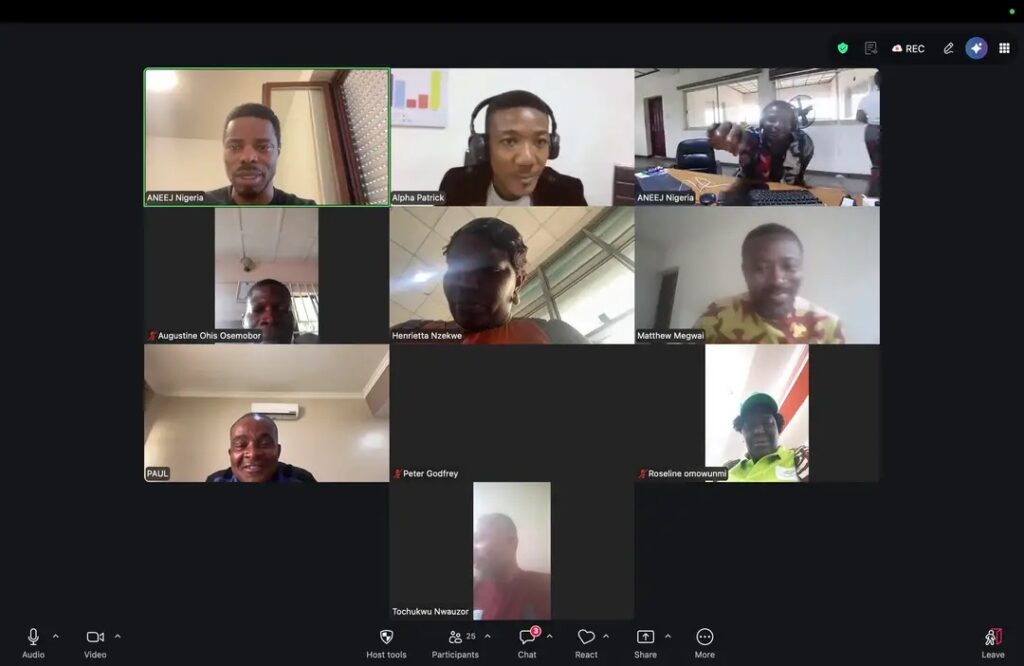
A main focus of the webinar was emphasizing that social protection should be recognized as a fundamental human right, not just a charity. Panelists identified poor access to services, lack of coordination among government bodies, and low public awareness as major obstacles to effective social protection for children and vulnerable families.
To tackle these issues, participants proposed specific recommendations, including strengthening referral systems among government agencies, humanitarian groups, and communities to ensure quick and effective responses to child protection cases.
The panel also called for increased investment in preventive measures, including community awareness, parenting support, and mental health and psychosocial services. They stressed that preventing violations is more cost-effective and humane than responding after harm occurs.
Another key recommendation was improving transparency and accountability for child-focused programs. Panelists said that citizens and civil society must be able to monitor how resources intended for children are spent to reduce implementation gaps.
Additionally, experts suggested amending existing child protection laws to address new challenges, such as climate change, conflict, displacement, and digital risks. They highlighted the importance of laws evolving to protect children in a rapidly changing environment.
The webinar also stressed the need for inclusive policies and infrastructure to support children with disabilities and other vulnerable groups, ensuring no child is left behind.
The session concluded with a call for increased collaboration among government ministries, civil society, and development partners. Participants agreed on the importance of ongoing advocacy, better coordination, and active civic participation to effectively protect and promote children’s rights.
Looking ahead, ANEEJ announced it will compile and submit suggestions from the webinar to relevant national and international stakeholders before the 2027 review of the UN Human Rights Council Resolution on child rights and social protection.
Civil Society Organizations were encouraged to expand awareness campaigns on child rights and social protection in communities, schools, and religious settings to close the public knowledge gap.
Government ministries, such as Women Affairs, Justice, Health, and Education, were urged to strengthen collaboration with civil society and the National Orientation Agency to enhance public awareness initiatives.
State governments are also encouraged to accelerate the domestication and effective implementation of the Child Rights Act, including establishing functioning family courts and child protection systems.
Stakeholders agreed to promote inclusive policies and accessible infrastructure, so children with disabilities can fully access protection and social services.
Participants were invited to provide additional feedback and suggestions through ANEEJ’s official channels as the organization prepares for the 2027 UN review.
The webinar reinforced the shared commitment of all stakeholders to advance child rights and strengthen social protection systems in Nigeria, with panelists emphasizing that protecting children today is an investment in the country’s future.


