

ROOSC Partners with Media to Return 200,000 Children to School in Kaduna
By Femi Mustapha
In a world where education is seen as the foundation of progress, the urgent need for the government to turn its promises into actions for providing quality and inclusive education cannot be overstated.
Fortunately, under the leadership of Senator Uba Sani, Kaduna State has launched dedicated campaigns to address the high number of out-of-school children. One such campaign, part of the Reaching Out-of-School Children (ROOSC) project, is led by the Ministry of Education with support from partners like Save the Children International (SCI) and UNICEF. This initiative aims to return 100,000 children to school.
According to Governor Senator Uba, the Kaduna State Government has identified access to quality education and adequate infrastructure as critical challenges facing the education sector in northern Nigeria. “We set out to tackle the key challenges in the educational sector in Kaduna State in six ways: improving access, building and rehabilitating educational infrastructure to create a conducive learning environment, enhancing the capacity of teachers, leveraging information and communication technology (ICT) to improve access to quality education and its management, prioritizing girl-child education, and strengthening security in the state,” he explained.
The Reaching Out-of-School Children (ROOSC) project aims to provide quality education to over 200,000 out-of-school children, marking a significant step in the commitment to ensuring that every child in the state has access to quality education, regardless of their circumstances.
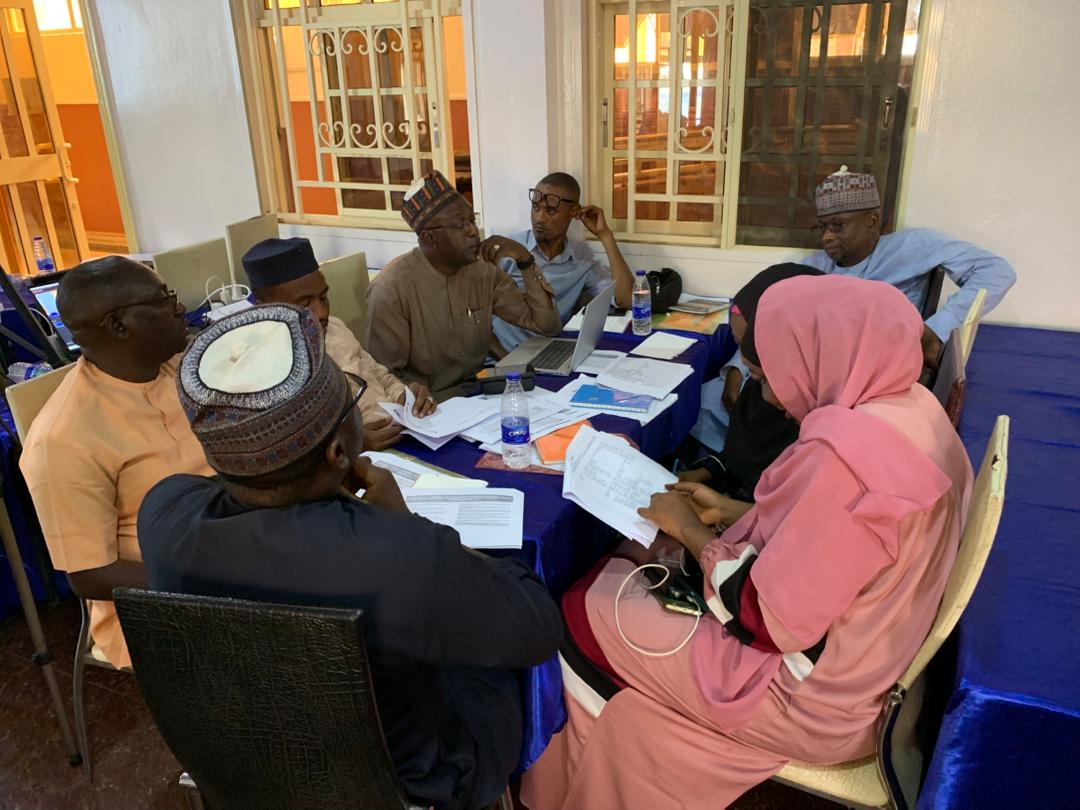
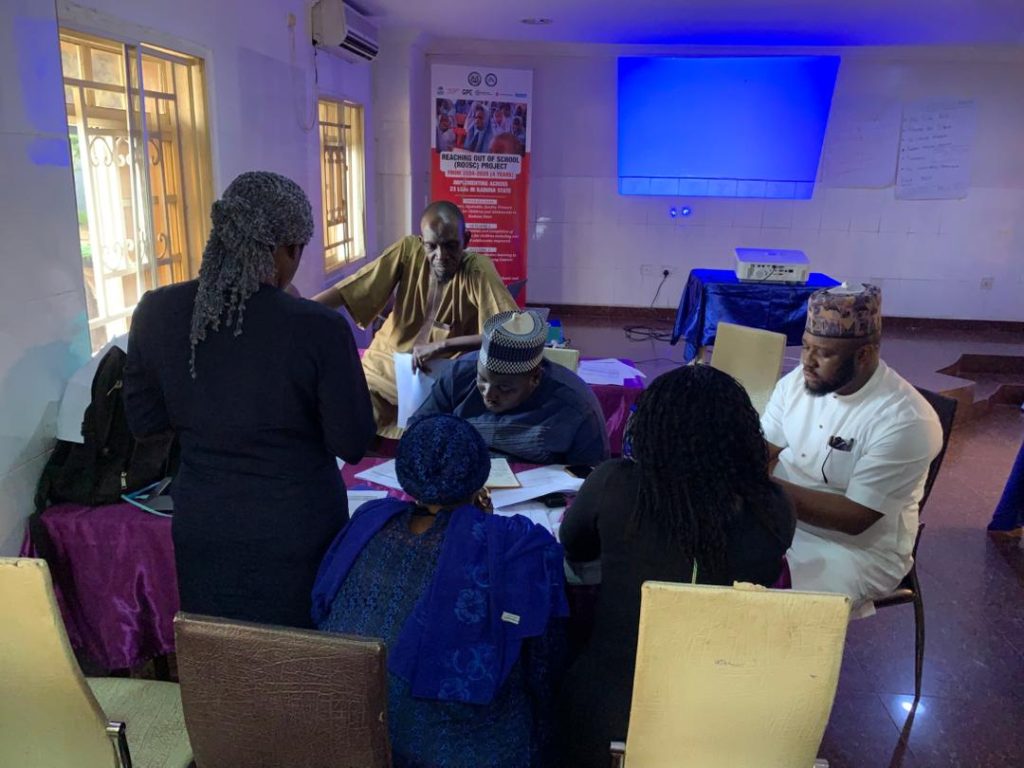
To demonstrate this commitment, the state government, with the support of its partners, recently organized a two-day workshop for media practitioners. The goal was to engage the media in the project and develop a visibility plan for the Media Working Group.
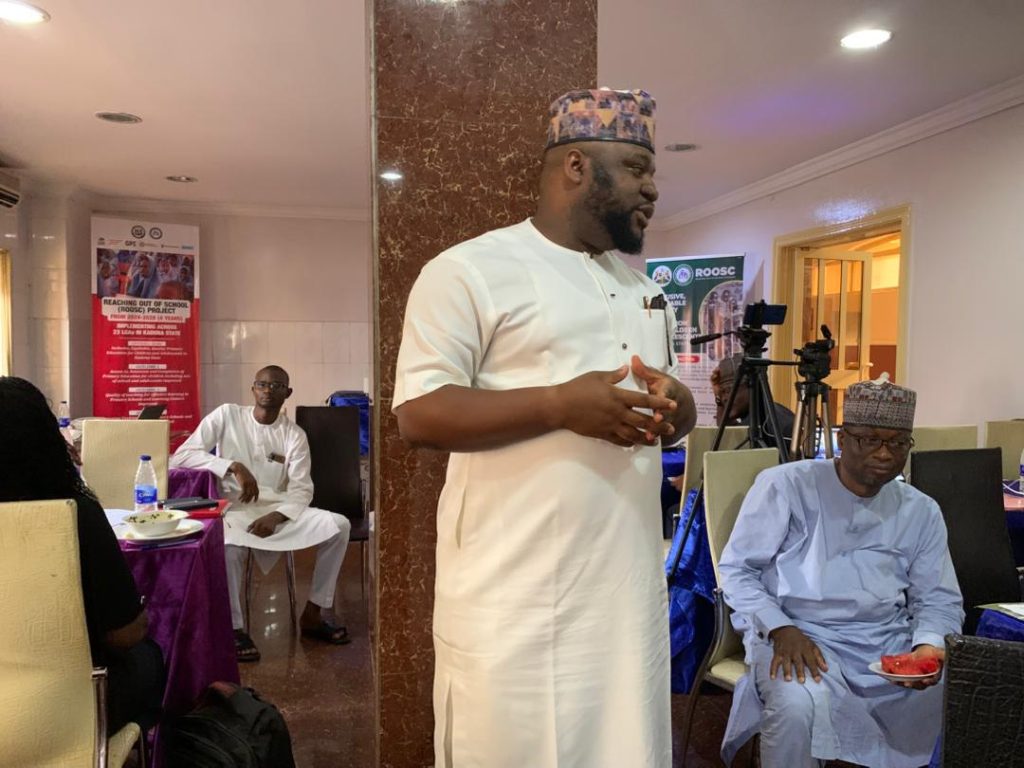
During the presentation, Salisu Baba, the Director of Planning at the Ministry of Education, expressed that the project aims to change the narrative for out-of-school children, particularly girls, children with disabilities, and adolescents, by providing them with educational opportunities and a brighter future. He emphasized that education is the foundation of a prosperous society, and its role in shaping the future of our state cannot be overstated.
Similarly, the Project Director of ROOSC, Mr. Emmanuel Mbursa, highlighted that the initiative will offer inclusive and equitable quality primary education for all children. He noted that the intervention is gender-sensitive and focused on providing sustainable and affordable education for every child in the state.
Mbursa clarified that out of the targeted 100,000 out-of-school children to be supported and returned to school, over 32,000 are currently enrolled in integrated Non-State Quranic, Tsangaya, foundation, and neighborhood schools. He also mentioned that 102 new schools would be constructed across the 23 local government areas, encouraging journalists to follow up and report on the project’s progress.
Masturah Baba, the Gender Inclusion Specialist for the ROOSC project, emphasized that gender inclusion is central to ensuring an inclusive education. She pointed out that the lack of proper Water, Sanitation, and Hygiene (WASH) facilities is a significant barrier to girl-child education and announced that over 7,000 dignity kits would be distributed to girls to improve menstrual hygiene. Additionally, girls will receive training on making reusable pads to promote sustainability.
Mr. Ezra Angai, the State Coordinator for Project ROOSC, stressed that with support from partners, the program has taken decisive actions that will pave the way for a brighter and more inclusive future for the youngest members of society. He urged the media to engage with the program and use their expertise to promote it effectively.
In his remarks, Alhaji Abdulgarfa Alabelawe, the Chairman of the Kaduna State Council of the Nigeria Union of Journalists (NUJ), said that media practitioners should reflect their commitment to education not just in words, but also through concrete actions in their reporting. “To tackle the issue of out-of-school children, media practitioners should focus on producing reports that will ensure no child is left behind,” he emphasized.


