

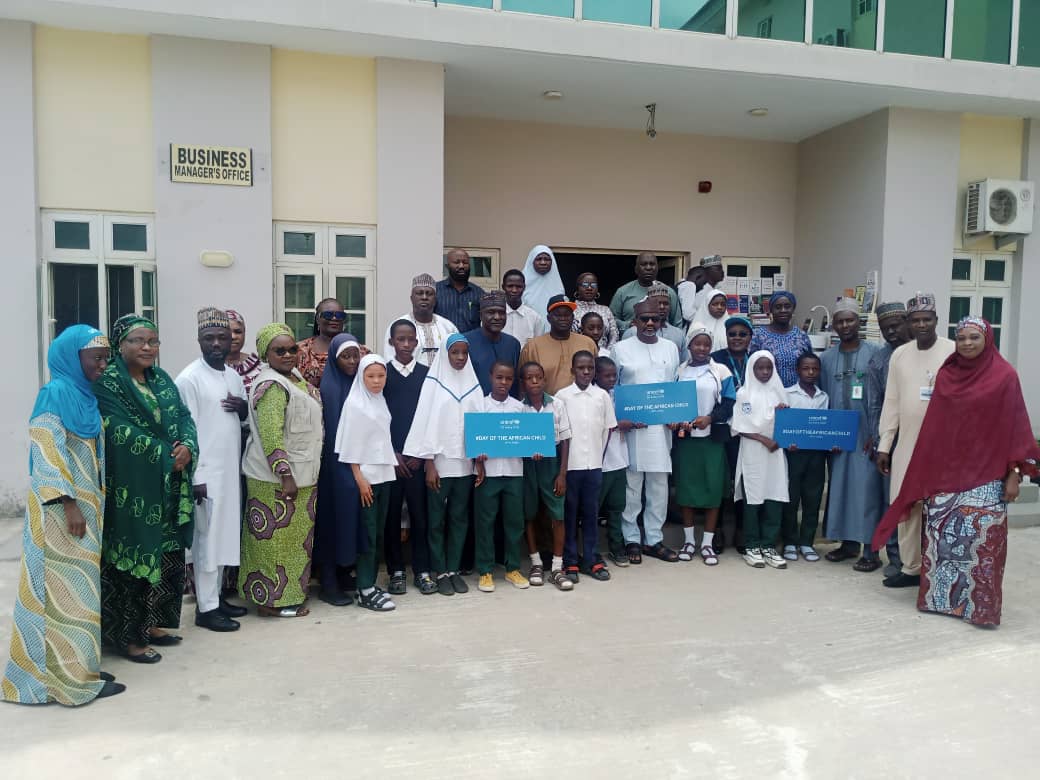
KDSG, UNICEF Secure Stakeholders’ Commitment to Child Welfare
By: Femi Mustapha
The Kaduna State Government, through the Planning and Budget Commission (P&BC), with support from the United Nations Children’s Fund (UNICEF), has launched initiatives aimed at increasing child participation in governance.
Stakeholders made commitments during the Kaduna Day of the African Child (DAF) commemoration with the theme: “Planning & Budgeting for Children’s Rights: Progress since 2010,” held yesterday.
The objectives of the commemoration included galvanizing political will for adequate resource allocation to child-focused services, increasing financial literacy among young people, raising awareness among all stakeholders about child-friendly budgeting, and promoting collaboration between the government and its youngest citizens.
The event provided stakeholders, including commissioners, policymakers from various ministries, civil society organizations (CSOs), students, and others, the opportunity to assess the progress made in mainstreaming children’s issues into planning and budgeting processes.
In his welcome address, Commissioner of P&B Hon. Monrovia Mukhtar Ahmed emphasized that this engagement is vital for encouraging all ministries to critically examine and reform their budgeting and planning mechanisms, adopting a child rights-based approach.
He noted that the 2025 theme calls for stakeholders to reflect on the journey undertaken since 2010, when the theme was “Planning and budgeting for children’s rights: a collective responsibility.”
The event aims to open channels of communication, fostering greater budget transparency, efficiency, effectiveness, and equity in resource allocation.
“We acknowledged at that time that despite our best intentions, the realization of children’s rights was hindered by various factors, including resource limitations, inadequate consideration of child protection in national programs, inefficient resource use, and a lack of child participation in planning.
“We are here today to review our performance honestly, identify progress made, and acknowledge the challenges that persist. Throughout the day, we will engage in a high-level review of child-friendly budgeting performance from 2020 to 2025, examining budget allocations, their impact on relevant indicators, and charting a path forward.
According to Hon. Ahmed, the need to increase child participation in governance arises from Nigeria being a democratic nation. The Kaduna State Government aims to achieve inclusivity by initiating a process for children to become involved in policymaking.
Expressing hope for a positive outcome, Hon. Ahmed wished that this platform would raise awareness and encourage greater participation of children in financial planning, identifying further opportunities for improved child-friendly budgeting and policy formulation.
He urged participants to support their commitments with actions, especially within local communities, stating that while the government is responsible for children’s welfare, leaders cannot shoulder this burden alone; community members must also fulfill their roles.
He charged stakeholders with the responsibility to work collectively toward a future where every child’s rights are recognized and fully realized through strategic and child-friendly planning and budgeting.
“I extend a warm welcome to all our distinguished participants: top policymakers from various ministries, students, out-of-school children, UNICEF Champions, media representatives, our invaluable development partners, CSOs, and colleagues from UNICEF.
Your diverse perspectives and expertise are essential to achieving our shared goals.
Your collective presence on this 17th of June, 2025, underscores the profound commitment we all share towards ensuring the well-being and development of every child in our state and country,” he concluded.
Similarly, in her address, Dr. Gerida Birukila, Chief of Field Office for UNICEF in Kaduna State, emphasized that the 2025 theme challenges stakeholders to assess how effectively child rights are integrated into state plans and budgets, and how much more work is needed.
Unfortunately, she noted that financial commitments, allocations, and releases often fall short of what is needed to make a real impact on children’s lives, especially given the current challenges of shrinking aid and tight fiscal constraints.
Recently, the state budget has shown a slight increase in investments for children, particularly in education, health, social protection for vulnerable children, security, and inclusive rural development. However, despite these improvements, child welfare indicators in Kaduna remain concerning.
- 29.8% of primary school-age children and 52.5% of secondary school-age children are out of school.
- The under-five mortality rate is 127 per 1,000 births, compared to a global average of 37 per 1,000.
- Only 54.5% of children under five have received birth registrations.
- Just 41% of children under six months are exclusively breastfed, and 66% of the population has access to basic drinking water.
With a Multidimensional Poverty Index of 0.311, 56.5% of the population lives in multidimensional poverty.


