

Nigeria Takes Steps to Strengthen Social Protection System
By:Femi Mustapha
The Federal Ministry of Humanitarian Affairs and Poverty Reduction has reaffirmed its commitment to enhancing Nigeria’s social protection system.
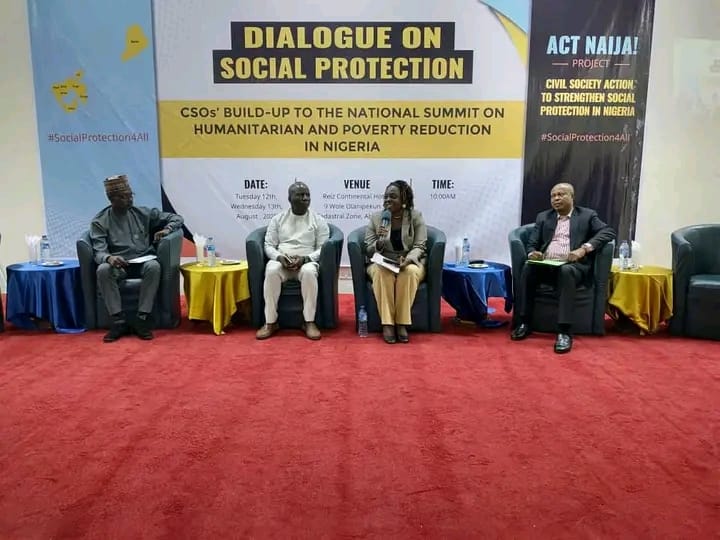
This was announced by the Minister of State for Humanitarian Affairs and Poverty Reduction, Hon. Dr. Yusufu Tanko Sununu, during a recent dialogue on social protection in Nigeria.
Dr. Sununu disclosed that the Ministry has implemented several initiatives to support vulnerable populations, including the National Social Investment Programme Agency (NSIPA).
He highlighted that the Ministry assists households through programs such as the Grant for Vulnerable Groups (GVG), the Government Enterprise and Empowerment Programme (GEEP), and the National Cash Transfer Office (NCTO).
The National Commission for Refugees, Migrants, and Internally Displaced Persons (NCFRMI) addresses the needs of refugees, migrants, and internally displaced persons (IDPs).
It has initiated massive farming cooperatives for IDPs in affected regions. Additionally, the Skill-2-Wealth Programme equips unemployed youth with industry-relevant skills in high-demand sectors such as renewable energy, agriculture, and automotive technology.
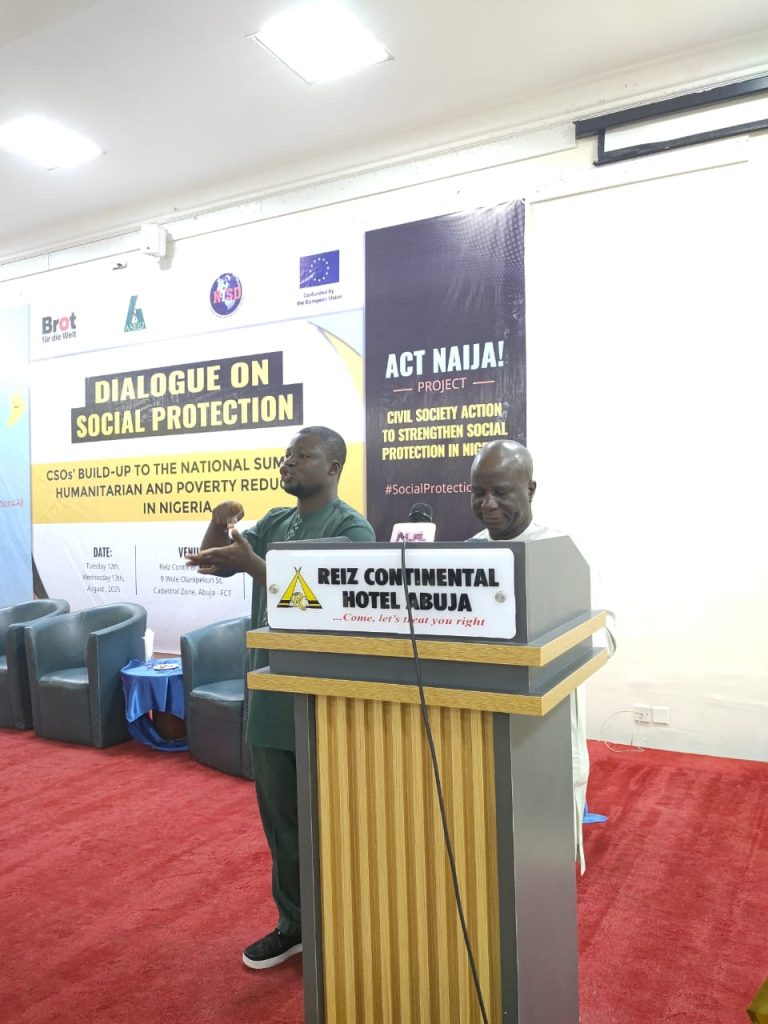
Hon. Dr. Yusufu Tanko Sununu emphasized the importance of collaboration and partnerships in strengthening Nigeria’s social protection framework.
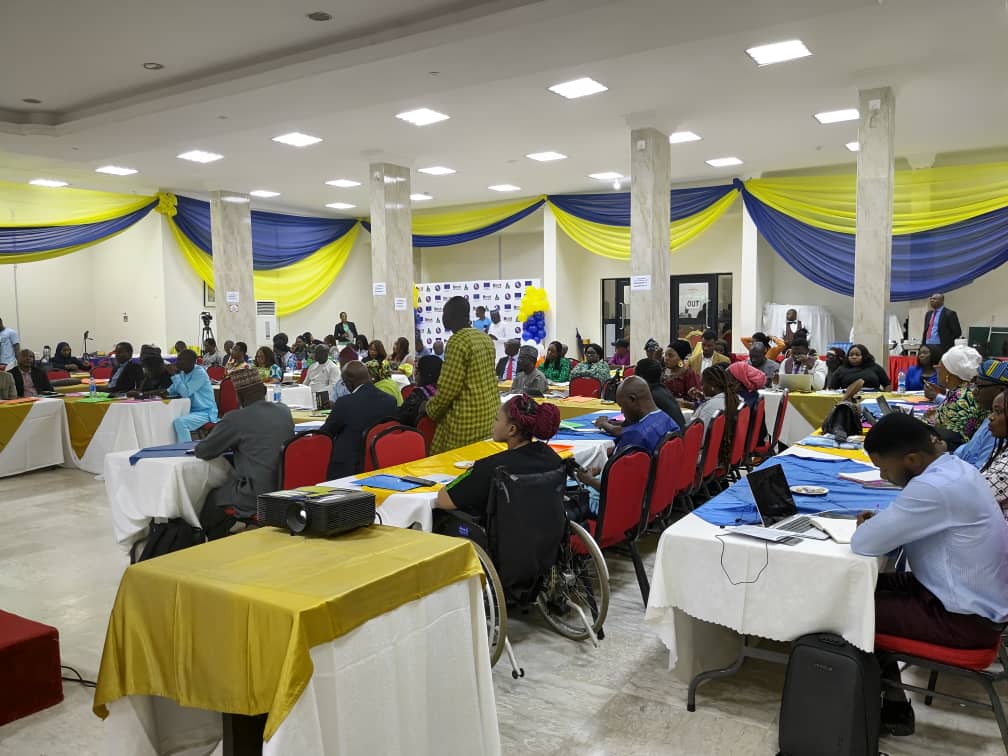
He noted that the dialogue on social protection brought together stakeholders from the government, civil society, and development partners to discuss ways to enhance social protection interventions.
However, he expressed concern that despite progress made, Nigeria still faces significant challenges in addressing poverty and vulnerability. According to the National Bureau of Statistics, 44.7 million men and 43.7 million women live on less than $1.90 a day, and 63% of the population is multidimensionally poor. Nevertheless, the Ministry is committed to providing integrated and sustainable services to crisis-affected populations and to promoting social protection programs that combat poverty and inequality.
The Minister called for deeper partnerships, bolder actions, and greater accountability to ensure that social protection programs are effective and inclusive.
In his welcome address, Rev. David Ugolor, Executive Director of the Africa Network for Environmental and Economic Justice (ANEEJ), thanked the European Union for its support and thanked the Minister of Humanitarian Affairs and Poverty Reduction for his warm reception and collaboration.
Rev. Ugolor explained that the Act Naija! Consortium, which includes Bread for the World (Germany), ANEEJ, and the New Initiative for Social Development (NISD), convened the dialogue as a precursor to the National Summit on Humanitarian and Poverty Reduction in Nigeria. The objectives of the dialogue included:
Presenting the Act Naija! Project baseline study report to the government and other stakeholders for discussion and potential action on the recommendations.
“Reviewing the current state of social protection in Nigeria and identifying opportunities for civil society engagement and monitoring.
“Strengthening collaboration between civil society and the government for more inclusive and transparent social protection delivery.
“Engaging with international development partners and learning from global best practices.”
Rev. Ugolor emphasized that with the support of development partners and civil society organizations, Nigeria can make meaningful progress in reducing poverty and promoting sustainable development.
He highlighted that the upcoming National Humanitarian and Poverty Reduction Summit in October 2025 will serve as a platform for stakeholders to discuss ways to enhance social protection initiatives and promote poverty reduction strategies.


