

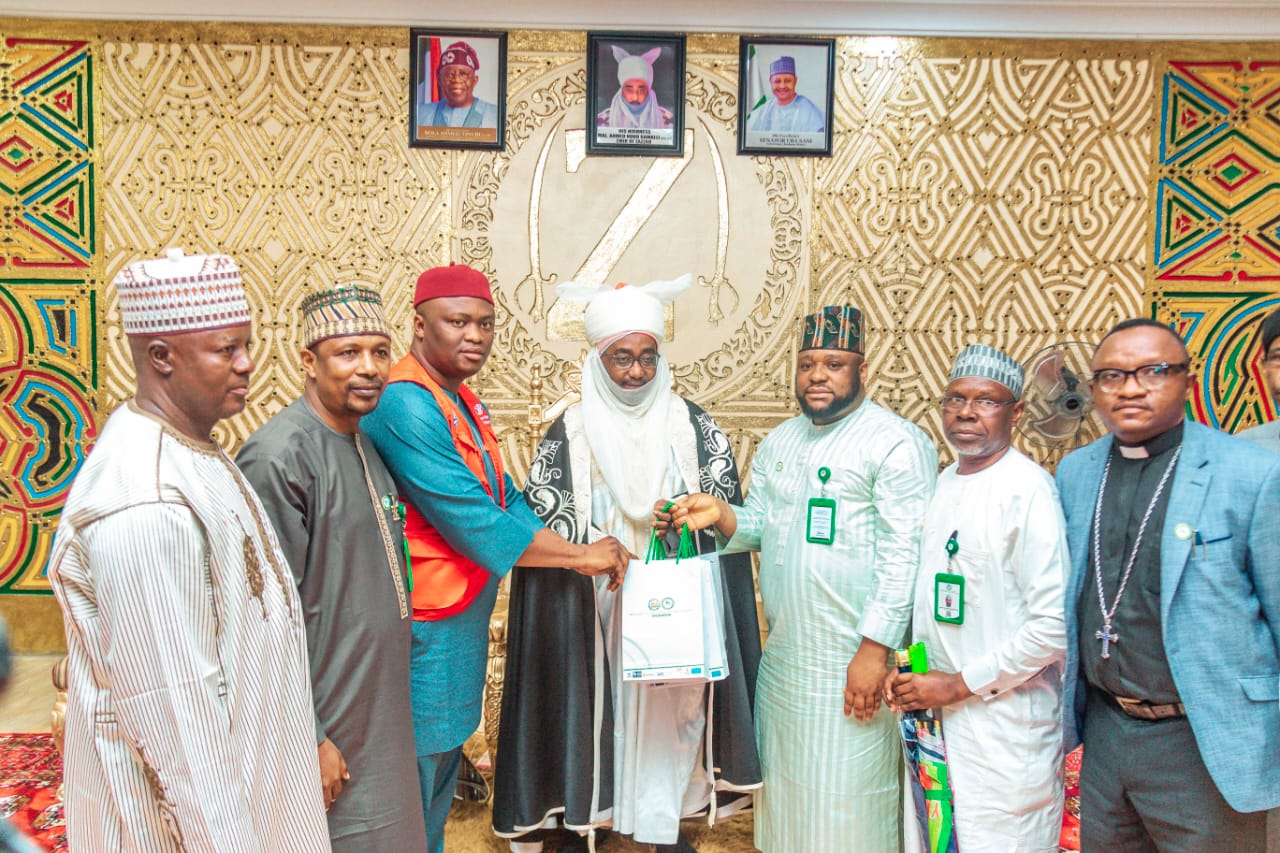
ROOSC Presents Scorecard on Project Implementation to Emir of Zazzau
By: Femi Mustspha
The Reaching-Out-of-School Children (ROOSC) Project recently paid a courtesy visit to the Emir of Zazzau, Amb. Ahmed Nuhu Bamali, in Zaria to provide an update on the project’s implementation and seek support for extending its reach to other local government areas (LGAs).
The delegation included representatives from all implementing partners of the project—Save the Children International (SCI), the United Nations Children’s Fund (UNICEF), the Islamic Development Bank (IsDB), Education Above All (EAA) Foundation and the Global Partnership for Education (GPE)—and was led by the project coordinator of ROOSC, Mr. Ezra Angai.
This visit came months after the delegation’s initial courtesy visit in March 2025, during which they formally introduced the project to the Emir and sought his support, along with that of other traditional leaders, for its initiatives.
Mr. Ezra Angai provided an overview of the project, highlighting objectives that aim to increase equitable access to education, foster effective participation, and ensure the completion of inclusive primary education for out-of-school children.
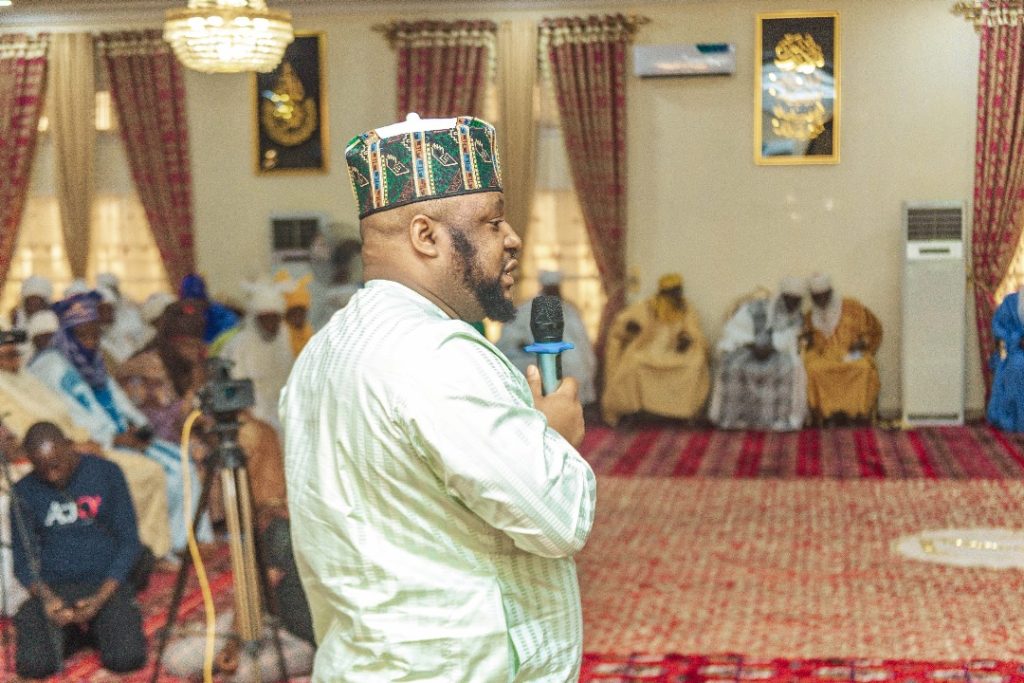
He emphasized the goal of improving the effectiveness of teaching and learning in targeted primary schools and learning centers while enhancing system efficiency for improved performance and value for money in primary education management and delivery.
During the presentation, he reported the successful identification of 4,545 out-of-school children through mapping conducted in nine LGAs: Soba, Lere, Sabon Gari, Kaduna North, Kaduna South, Igabi, Jama’a, Kachia, and Kauru.
He also discussed the success of ‘Back-to-School’ campaigns in the selected communities, which garnered the endorsement of traditional and religious leaders to support the project.
This support ensures that local leaders and community heads take ownership of the initiatives, including donating land for new school construction.
Mr. Angai revealed that ROOSC, with the support of its partners, is prepared to extend the project to 14 additional LGAs, with mapping set to conclude by October 2025.
He noted that 1,868 learners have been enrolled in 38 Accelerated Basic Education Program (ABEP) centers, designed to provide a second chance for children of school age to return to education.
After nine months in these centers, they will be examined and placed in schools.
The project has also conducted community-led advocacy and sensitization in 29 communities across the nine LGAs, as part of the ‘Back-to-School’ campaigns, and distributed 1,286 learning kits to ABEP centers.
Additionally, 10,728 learners have been enrolled in 73 Catch-Up Clubs (CUCs), which help those with no formal education to identify numbers and words before transitioning to regular schools.
Mr. Angai mentioned that over 300 teachers, including School-Based Management Committee (SBMC) officers, have received training in Kaduna at both the State and local government levels. In just nine months, significant strides have been made toward achieving the project’s goals.
A major challenge identified is the need for greater sensitization. “People need to understand that sending children to school is primarily the parents’ responsibility, followed by the community, and then the government. This way, we will have more children in schools,” he said.
Notably, the project also focuses on enrolling children in vocational training to equip them with essential skills for their future, facilitating exposure to various career paths.
Furthermore, 45 Al-Amaras have been engaged, and 25 schools have been selected to integrate religious education with Western education. Plans are in place to renovate these schools, provide stipends for financial needs, and supply learning materials.
Mr. Angai expressed gratitude to the Emir for his commitment to the project, ensuring that every community within his jurisdiction is fully engaged in its implementation. He requested ongoing support for the project’s expansion to other LGAs.
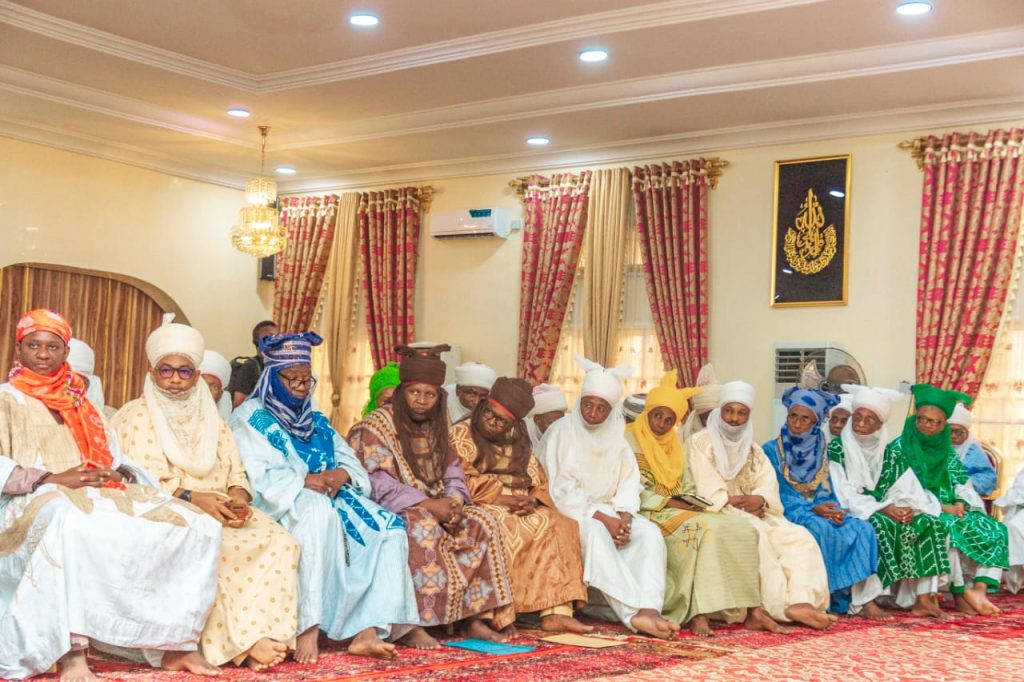
In response, the Emir, alongside his Council Chiefs, assured the team of their commitment and promised to champion the cause to ensure every child has access to quality education.
“I’m delighted to see that all we discussed during the first meeting is clearly reflected in this presentation, especially regarding the transparency and accountability of the team. This demonstrates that the vision of providing quality education for these children can be realized,” he stated.
The Emir expressed particular satisfaction with the initiative to enhance informal education by partnering with Tsangaya schools and Ilamiyas, ensuring that children with only religious education can now learn to read and write.
“During my time, we didn’t have that opportunity, and such children were often labeled as illiterates. This development is a positive change,” he added.
The Emir also expressed gratitude to the State government for establishing the ROOSC project, noting that it has already begun to have a significant impact on the lives of many, contributing to a better future for all.


