

By: Edirin Robinson
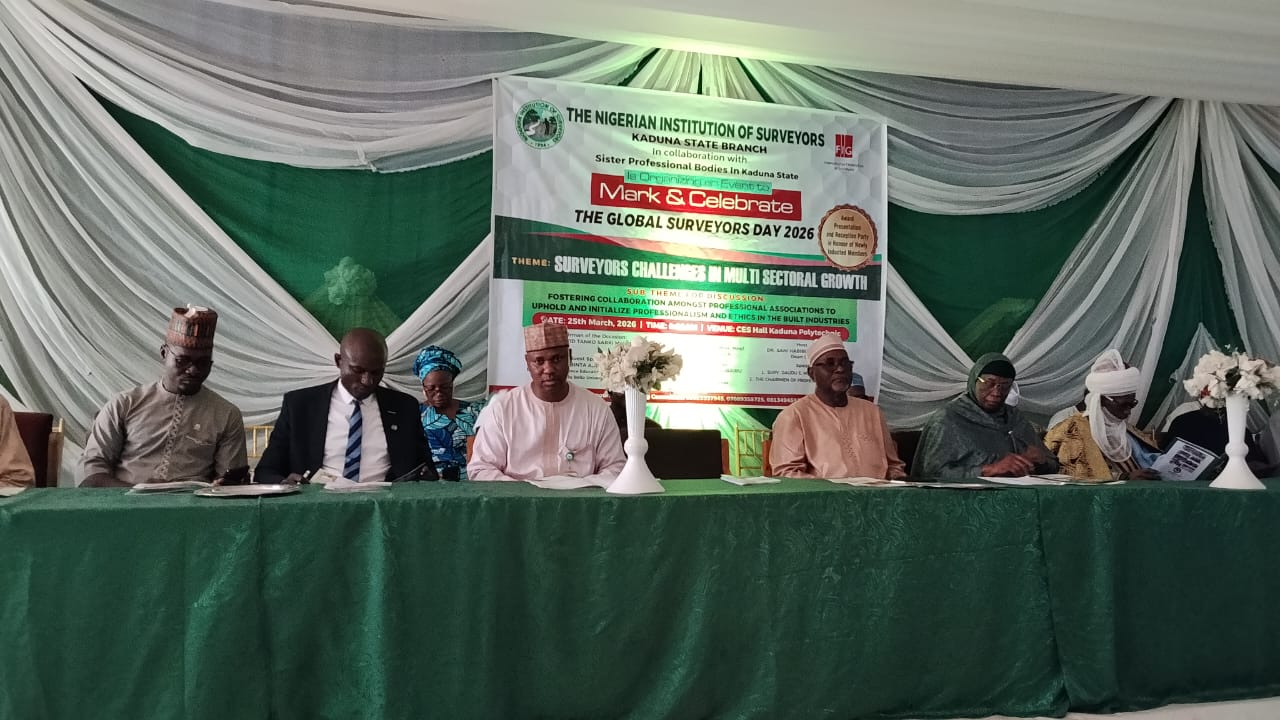
The Nigerian Institution of Surveyors (NIS), Kaduna State Branch, commemorated Global Surveyors Day, highlighting the importance of unity and collaboration among professionals in the built environment sector.
During the event, Surveyor Maikano Samson, Chairman of NIS Kaduna State Branch, described the celebration as a synergy among professional bodies in the allied industry aimed at promoting professionalism and fostering development in Kaduna State.
“Surveying is the foundation of every development,” he stated, adding that surveyors are the first on site and the last to leave.
The gathering included surveyors and other professionals in the built environment sector, all of whom called for greater recognition and support from the government.
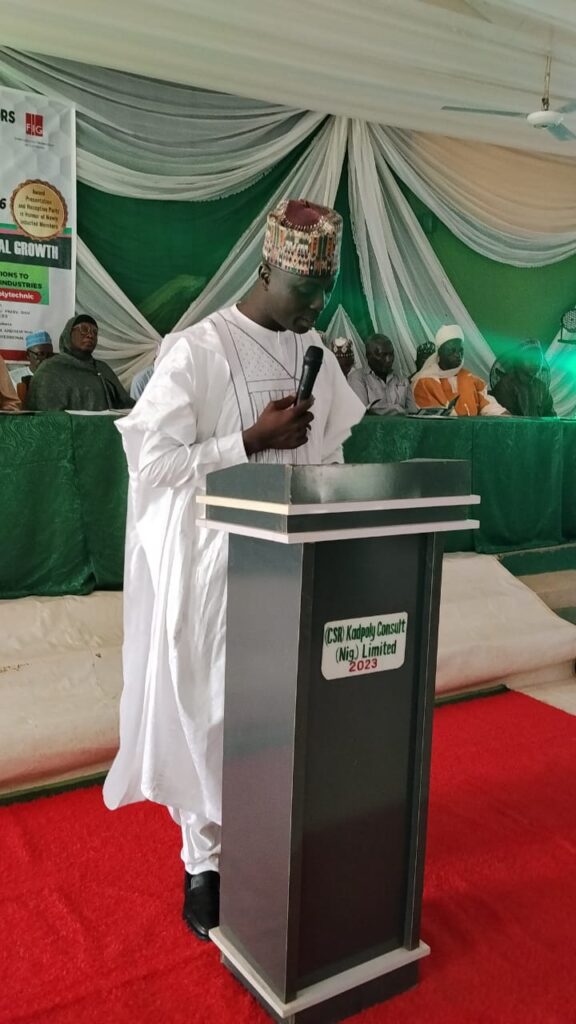
Surveyor Samson appealed for the creation of a conducive environment for surveying and related professions to flourish, including access to modern equipment and ongoing training for surveyors.
Surveyor Abdulnajid Mohammed Lawal, Chairman of the Organizing Committee, remarked that the celebration provided an opportunity for surveyors to reevaluate and strategize on ways to enhance their services to clients and professional peers.
He stressed that synergy and collaboration are crucial for achieving shared goals.
Surveyor Musa Ephraim, Council Representative for Kaduna State, NIS, discussed the challenges confronting surveyors in Nigeria, including government policies that do not favor the profession.
He urged policymakers to establish supportive policies and ensure that surveying tasks are entrusted to qualified professionals.
The event also emphasized the importance of motivating youth to pursue surveying as a career. Surveyor Ephraim noted that attracting young talent is hindered by the profession’s demanding nature, but efforts are underway to raise awareness and encourage enrollment in surveying courses.
In her keynote address, Professor Binta Abdulkarim of Ahmadu Bello University, Zaria, proposed a Tripartite Covenant—a structured collaboration among professional associations to promote professionalism and uphold ethics.
She pointed out sector challenges such as structural failures, quackery, and regulatory gaps, emphasizing that no single association can address these issues alone.
The proposed Tripartite Covenant rests on three pillars: the Ethical Gateway and the Disciplinary Synergy. At the same time, a Code of Conduct for Multidisciplinary Firms was developed.
The Ethical Gateway advocates for joint Continuing Professional Development (CPD) initiatives and an anti-quackery task force, while the Disciplinary Synergy introduces a “One-Strike, All-Out” protocol to prevent professionals from shifting disciplines or practicing under a different association.
Surveyors underscored the importance of collaboration and unity, likening the built environment to a tapestry—if one thread frays from unethical conduct, the entire fabric weakens.
They proposed establishing a Built Environment Professional Ethics Council (BEPEC) to maintain a shared digital database of registered and deregistered professionals and to publish a quarterly “Black Book” of quacks and unethical firms.
Additionally, the event featured the signing of a memorandum of understanding (MoU) to recognize ethical sanctions mutually, marking a significant milestone.
Surveyors encouraged young professionals to uphold ethics and professionalism, calling on government and regulatory bodies to support these efforts.
The celebration closed with a rallying cry for professionals to collaborate in building a sustainable, credible built environment sector, ensuring Nigeria’s infrastructure, safety, and investor confidence depend on their united strength.


