

By: Femi Mustapha
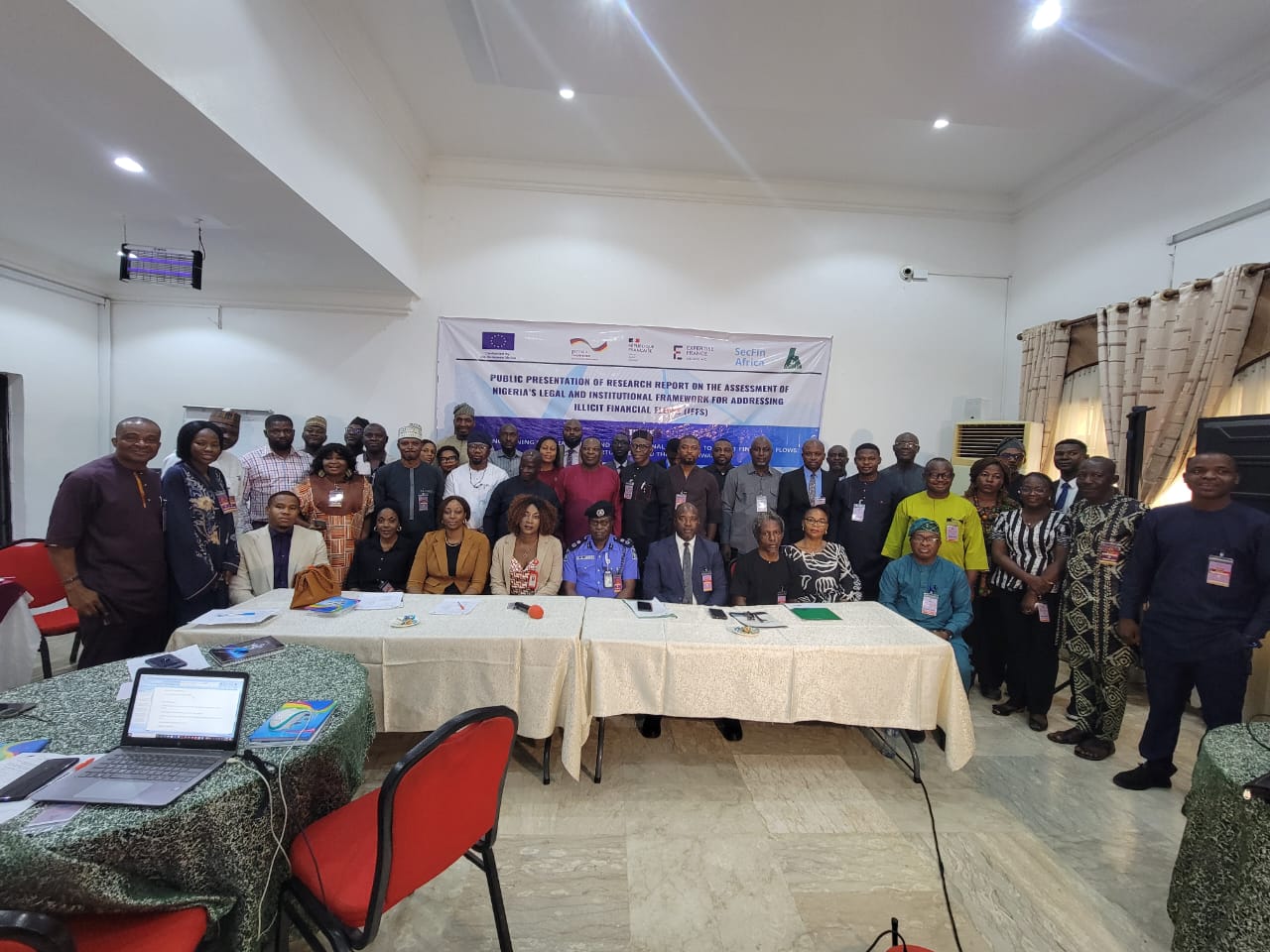
Civil society organizations, government agencies, development partners, and the media have committed to increased collaboration to fight illicit financial flows (IFFs) in Nigeria following the public presentation and validation of the Research Report on the Assessment of Nigeria’s Legal and Institutional Framework for Addressing IFFs.
The event, held on May 14, 2026, in Abuja, was organized by the Africa Network for Environment and Economic Justice, ANEEJ, under its project “Strengthening CSOs and Media Capacity to Contribute to the Fight Against Illicit Financial Flows in Nigeria,” supported by the European Union through the SecFin Africa Program.
In his opening remarks, ANEEJ Executive Director David Ugolor stated that the report arrives at a crucial time for Nigeria and the continent, as IFFs continue to drain the country of resources essential for development, healthcare, education, and poverty alleviation.
Ugolor pointed out that although Nigeria has established agencies like the EFCC, ICPC, NFIU, Nigeria Revenue Service, and Nigeria Customs Service to fight corruption and money laundering, there are ongoing gaps in enforcement, inter-agency coordination, and citizen participation.
He described the report as a practical tool designed to support evidence-based advocacy, bolster civil society and media involvement, and aid government efforts to reduce IFFs. “Addressing IFFs requires a whole-of-society approach. Government institutions alone cannot succeed in this challenge,” Ugolor emphasized, calling on participants to move from diagnosing the problem to implementing practical solutions.

Representing the SecFin Africa Program, Prof. Abdullahi Shehu praised ANEEJ for its initiative, noting its alignment with SecFin’s technical support efforts for Nigeria, which focus on information sharing, capacity building, and regional cooperation.
Shehu explained that the research aligns with SecFin’s first pillar, which aims to raise awareness and provide reference materials to empower civil society to engage constructively with government. He urged institutions such as the NFIU, EFCC, ICPC, and the Code of Conduct Bureau to review the report and provide feedback before publication.
Delivering the goodwill message on behalf of the Inspector General of Police, IGP Olatunji Rilwan Disu, Assistant Inspector-General of Police in charge of Legal Services, CP Aremu Bamidale Silas, said that IFFs remain one of the greatest threats to developing economies.
CP Aremu noted that modern financial crimes require stronger legal frameworks, better institutional collaboration, intelligence sharing, and technological innovation. He reaffirmed the Nigeria Police Force’s commitment to supporting lawful measures against financial crimes.
Barr. Munirah Elabor, Acting Deputy Director (Admin) Legal at the Code of Conduct Bureau, said the bureau recognizes the importance of robust legal and institutional mechanisms in combating corruption and illicit enrichment.
Elabor stated that the CCB remains dedicated to enforcing the Code of Conduct for public officials and ensuring compliance with ethical standards in public administration. She added that the research findings would help advance national anti-corruption reforms.
Speaking on behalf of the British High Commission, Program Manager Anicatus Atakpu said the UK is proud of its partnership with Nigeria in addressing illicit finance and strengthening governance systems.
Atakpu emphasized that the challenge is less about having frameworks and more about their effective implementation, coordination, and accountability. She welcomed the focus on translating research into training and tools for CSOs and journalists.
Representing the Economic and Financial Crimes Commission, EFCC, Wananje Gwatana said illicit financial flows weaken institutions, distort government priorities, and reduce the capacity of countries to meet their citizens’ needs.
Gwatana stressed that responses to IFFs must evolve as financial crime threats change, and that collaboration among law enforcement, regulators, civil society, and the media is essential to building a transparent system.
Omiko Samson, who delivered the goodwill message on behalf of the ICPC Chairman, said illicit financial flows deprive Nigeria of resources needed for infrastructure, social services, and economic growth.
Samson said the ICPC remains committed to preventing corruption through enforcement, public education, and system reviews and will continue to work with partners to promote transparency and integrity in governance.
Mr. Ikuetimi Pere of the Federal Ministry of Justice described ANEEJ as an “omnipresent partner” in efforts to develop Nigeria’s asset recovery database, proceeds of crime regulations, and anti-corruption retreats.
Pere said the ministry believes that the research recommendations will improve laws aimed at curbing IFFs and reaffirmed the ministry’s support for ANEEJ’s efforts to clean up Nigeria’s economy.
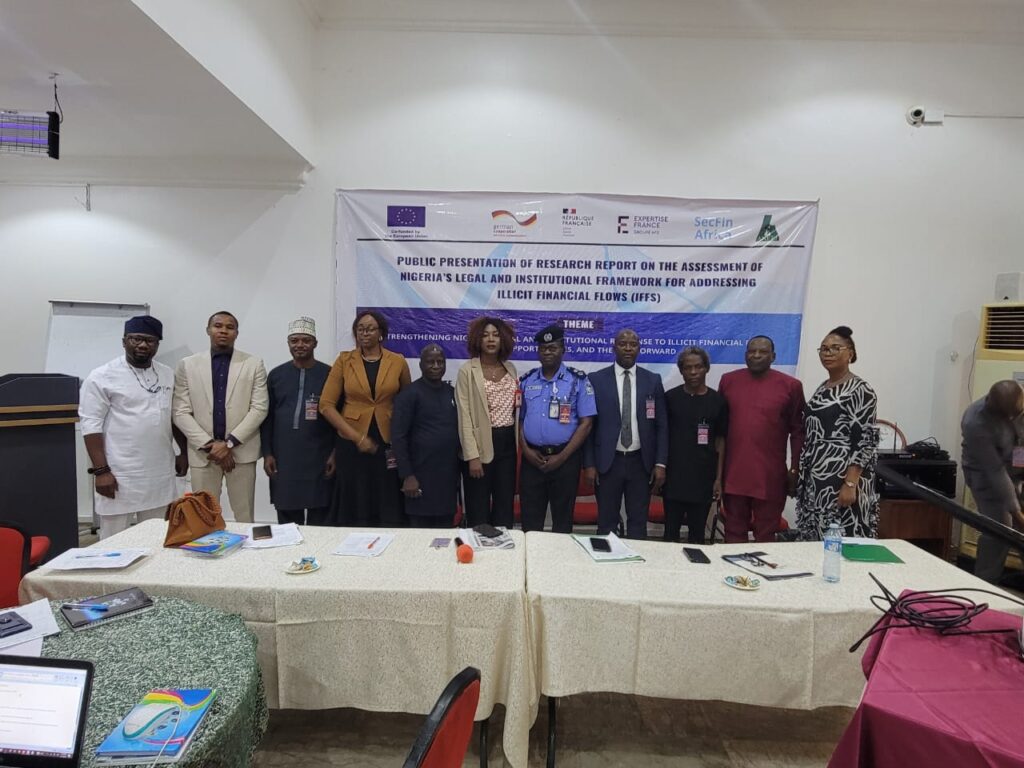
The event also featured remarks from Leo Atakpu, Deputy Executive Director of ANEEJ, who presented details of the SecFin Africa initiative funded by the EU, Germany, and France with a budget of €46.5 million.
Atakpu explained that the project will build the capacity of 90 CSOs and 75 investigative journalists, increase public awareness, and promote transparency in the use of recovered assets.
Participants at the validation session agreed that effective law enforcement, better inter-agency coordination, and ongoing citizen engagement are vital to reducing IFFs in Nigeria.
Stakeholders praised ANEEJ and the EU for organizing the dialogue, saying the platform would strengthen collaboration among government, civil society, and the media.
The meeting concluded with a call for all stakeholders to turn the research findings into concrete actions that enhance Nigeria’s response to illicit financial flows and support accountable governance.


