

From:Femi Mustapha in Kaduna
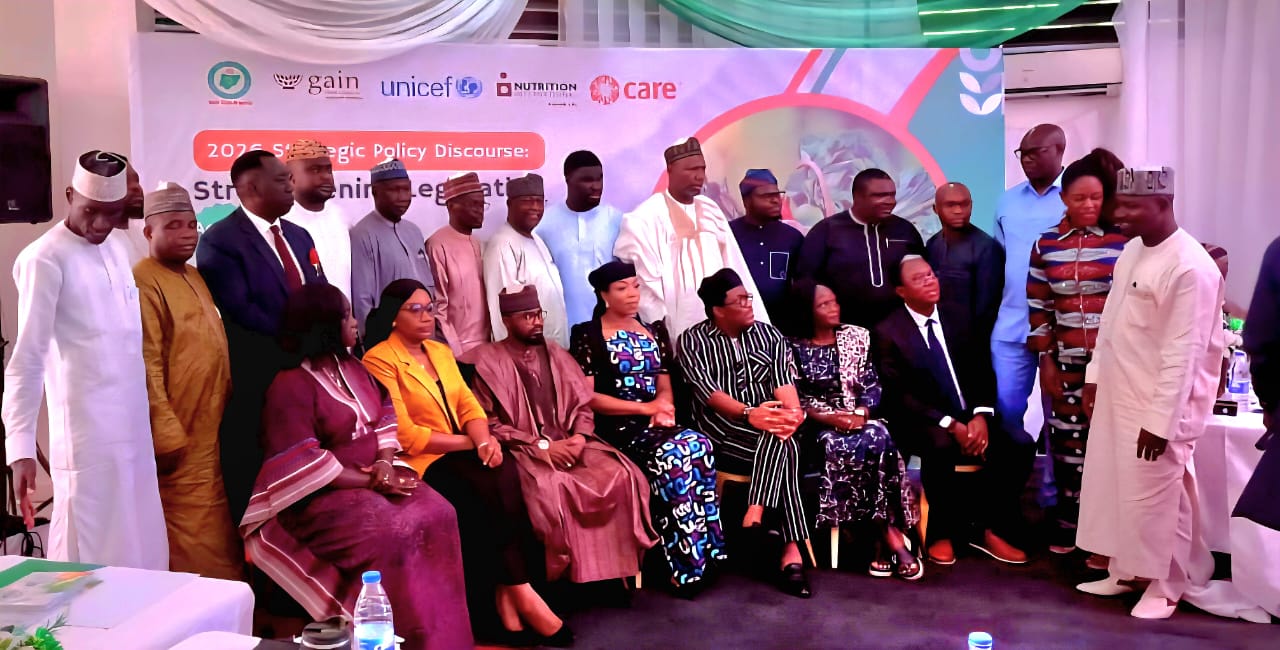
Nigeria’s leaders are declaring childhood malnutrition an economic emergency, not a welfare issue, as new data shows 15 million children are currently suffering from stunting. Lawmakers, state officials, and civil society advocates gathered in Lagos for the 2026 Strategic Policy Discourse to agree on a legislative and funding pathway to reverse the trend.
Co-hosted by Civil Society-Scaling Up Nutrition in Nigeria, CS-SUNN, and development partners, the high-level dialogue brought together representatives from 10 states.
The focus was clear: despite years of awareness campaigns, Nigeria’s childhood malnutrition rates have not improved, and systemic action is now urgent.
Delivering the keynote address, Honorable Chike Okafor, Chairman of the House of Representatives Committee on Nutrition and Food Security, completely redefined the problem.
“Malnutrition is not a social welfare issue; it is a full-blown economic crisis,” Okafor declared. He emphasized that robust nutrition is essential for human capital development and long-term economic growth, and must be treated with the same seriousness as infrastructure and industry.
The stance was strongly supported by Geoffrey Mbang, Chairman of the CS-SUNN Board of Trustees, who described this moment as pivotal for the country.
“Investing in nutrition is the smartest way to achieve human capital development,” Mbang said. “However, we cannot expect better nutrition outcomes without a radical improvement in policy, financing, legislation, and accountability.”
While awareness programs are in place at the federal and state levels, participants agreed that progress has stalled because policies lack legislative backing.
Advocates pointed out that key public health milestones — including six months of paid maternity leave and sustainable domestic nutrition financing — cannot be achieved without laws to enforce them.
To close that gap, the Federal Government is launching the newly established “Nutrition 774” Initiative. This flagship program aims to deliver large-scale nutrition interventions across all 774 Local Government Areas in Nigeria.
Mrs. Uju Rochas-Anwukah, Special Assistant to the President on Public Health and focal person for the Nutrition Office of the Vice President, said the initiative provides the perfect platform to channel sustainable funding directly to the grassroots, where malnutrition hits hardest.
There was also strong solidarity among subnational actors. The Speaker of the Zamfara State House of Assembly, speaking for all Speakers of State Houses of Assembly, pledged that state legislatures will step up.
The Speakers committed to three immediate actions: enacting stronger regional food security laws, ensuring improved and timely release of state-level nutrition funds, and strengthening legislative oversight to prevent fund diversion.
Executive Secretary of CS-SUNN, Sunday Okoronkwo, reviewed state governments’ commitments and analyzed progress, bottlenecks, and emerging opportunities in Nigeria’s fight against malnutrition.
He stressed the vital role of the legislature as a watchdog, monitoring implementation and safeguarding budget lines.
The discourse concluded with a clear call to action for federal and state lawmakers. To ensure Nigeria’s nutrition crisis “ends with our generation,” participants agreed on a three-pronged legislative strategy.
First, governments must allocate adequate funds for nutrition and food security in every budget cycle, targeting all vulnerable communities.
Second, Nigeria must pass legislation for six months of paid maternity leave and protect domestic funding for nursing mothers and infants.
Third, there must be complete transparency and accountability in how nutrition funds are managed and spent at all levels.
With the launch of the Nutrition 774 framework and what organizers described as a united legislative front, Nigeria’s leaders say they are ready to transform nutrition from a charity-based sector into a legally protected, nationally funded economic priority.
The message from Lagos was consistent: awareness alone has failed. Without laws, budgets, and oversight, 15 million children with stunted growth will remain statistics rather than a call to action.


