

By Femi Mustapha in Kaduna
For decades, Nigeria’s greatest strength, its staggering diversity of faiths, ethnicities, languages and traditions, has been turned into its most volatile fault line.
When inclusion fails, distrust grows. When citizens feel that identity determines access to land, schools, jobs and justice, the social contract frays. Rumor replaces truth, grievance replaces dialogue, and violence becomes a shortcut for those who profit from division.
Nowhere has this cost been more painful than in Kaduna State. Once celebrated as the political and spiritual capital of Northern Nigeria, the most cosmopolitan state in the country, Kaduna became a byword for toxic division.
For over a decade, entire communities lived with suspicion. As Governor Uba Sani recalled on Monday, the toxicity was so deep that some citizens he allocated land to refused to build on it, simply because of the dominant faith in that area.
That history left scars that statistics can barely capture. Before May 2023, official records show 4,876 lives were lost to insecurity, 7,694 people were kidnapped in 1,660 incidents, 534 schools were shut, and 500,000 hectares of farmland were abandoned.
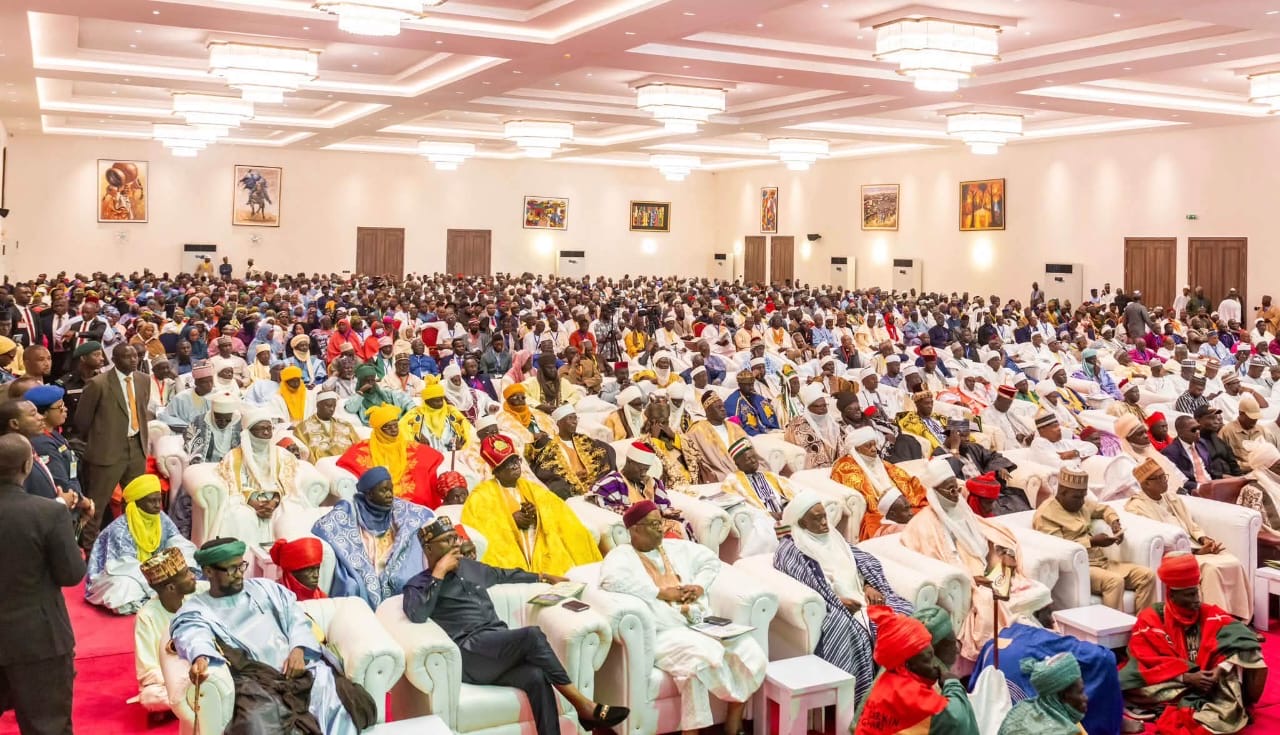
It was against this backdrop that religious leaders, traditional rulers, ministers, former governors, and community stakeholders gathered at the Brigadier Abba Kyari Banquet Hall for a Special Interfaith Dialogue organized by the Kaduna State Bureau of Interfaith.
The theme, “An Overview of the Impactful Three Years of Peaceful Coexistence and Inclusivity in Kaduna State: Unveiling The Secret,” coincided with the International Day of Peace, whose 2025 theme is “Invest In Peace, For Everyone, In Everywhere, Everyday.”
What emerged from the hall was not a political rally, but a rare consensus. Muslim and Christian clerics, who for years stood on opposite sides of the divide, rose to affirm that Kaduna now enjoys relative peace and harmony.
Governor Uba Sani, the special guest of honor, set the tone with a lengthy, reflective address. He told the gathering that his model of governance is simple and does not need any study.
“People have been asking me about our model. Our model is very simple. It does not need any study. It is about justice. It is about inclusivity. It is about bringing everyone to the table,” he said.
He reminded the audience that on May 29, 2023, he took an oath, holding the Glorious Qur’an, to be fair to everyone, irrespective of religious, ethnic, or political affiliation, and that inclusivity would be his government’s non-negotiable principle.
Uba Sani said his administration had to confront religious and ethnic merchants around power who cannot survive without violence, insisting that true leadership must battle those narrow interests first.
He disclosed that a needs assessment at inception revealed that 12 local governments had been abandoned for over a decade without a single kilometer of road, including Makarfi, the local government of the Secretary to the State Government, Dr. Maiyere.
“Today, I am happy to say that no local government is left behind in Kaduna State. All the local governments today are experiencing development. That is the reason why we are achieving this relative peace. It is about justice. It is about making everyone believe that he matters,” he said.
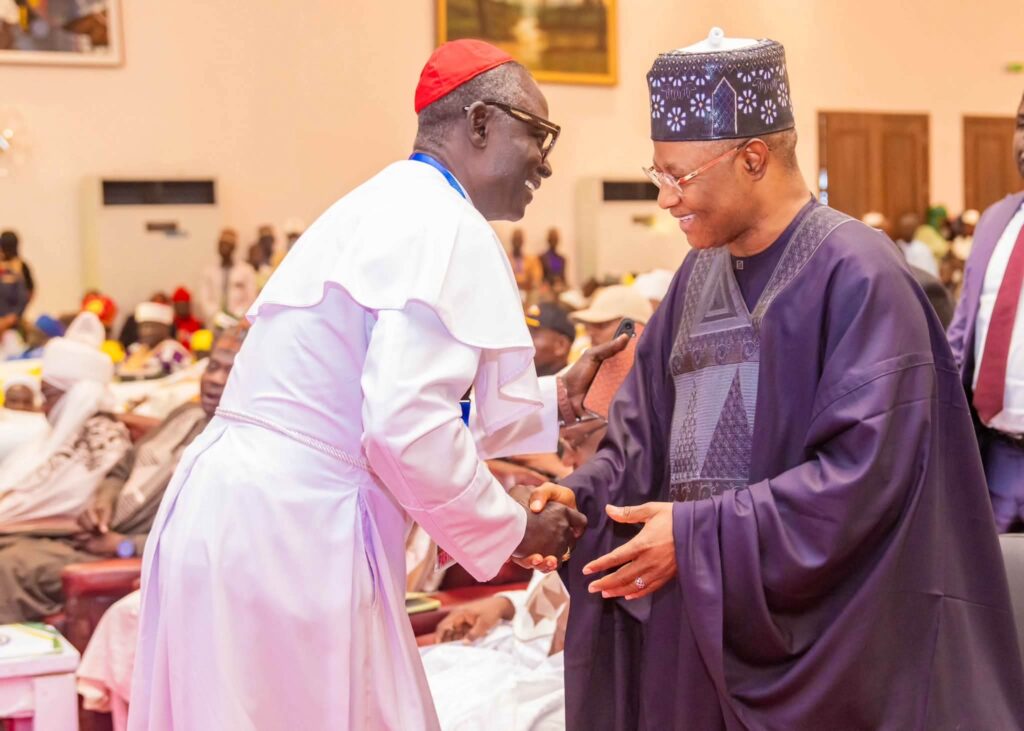
For the Chairman of the Christian Association of Nigeria, Kaduna State Chapter, Rev. Caleb Ma’aji, that promise has been translated into visible projects.
Rev. Ma’aji recalled that during the Christmas Carol on December 22, 2024, at the High Court, he requested three roads on behalf of his people: the Nasarawa-UNTL-First Bank route, the PAN Drive-Television Garage-Sabon Tasha road, and the Romi-Karatudu road.
He expressed gratitude that two of the roads have been completed and the third is almost complete. He thanked the governor for reintroducing Christian pilgrimage to Jordan and Jerusalem, and for sponsoring 50 Christians last year.
The CAN Chairman also hailed the selection of Mr. Jerry Adams as the governor’s running mate for the 2027 election, describing it as a departure from the culture of old and proof of genuine inclusion.
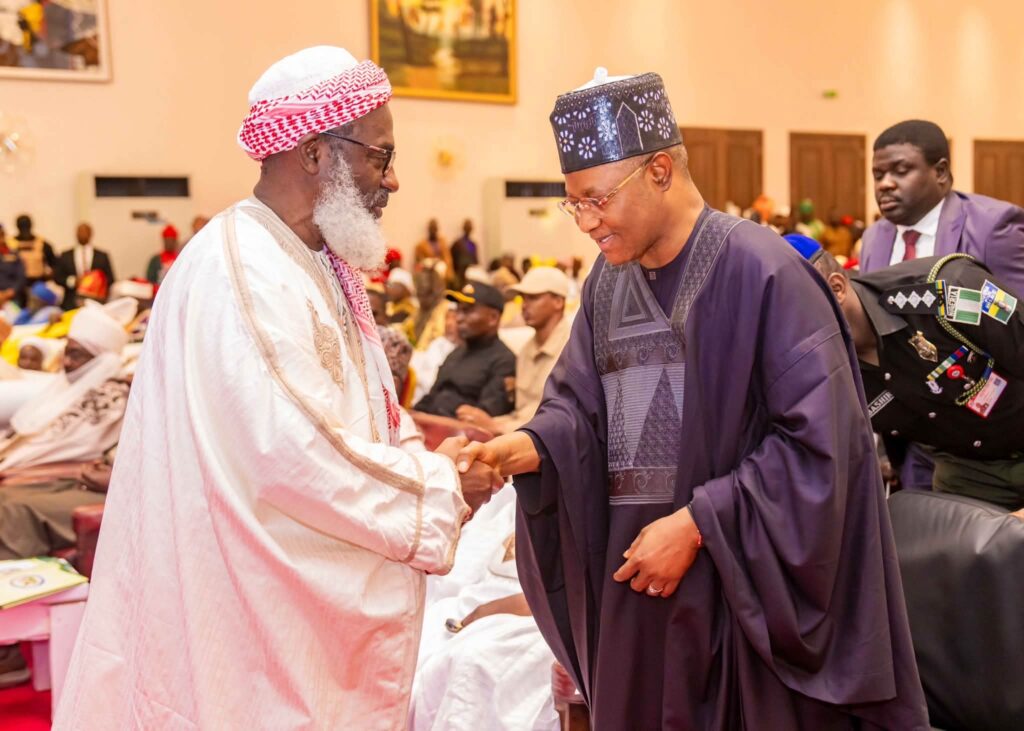
Co-Chair of the Interfaith Council, Sheik Ahmad Gumi, said the peace Kaduna enjoys is not accidental but the product of kinetic and non-kinetic strategies.
Gumi cited the upgrade of Sultan Bello Primary School, built by the Sardauna of Sokoto and neglected for over 60 years and now fitted with smart interactive boards, and support to a 650-member mega-farm cooperative with two tractors and free fertilizer.
Quoting a Hadith recorded by Imam Muslim, “Inna Allaha rafeequn yuhibbu ar-rifq, wa yu’tee ‘ala ar-rifqi ma la yu’tee ‘ala al-‘unf,” he said gentleness in governance achieves what harshness cannot.
The Secretary General of Jama’atu Nasril Islam, Prof. Khalid Aliyu, brought greetings from His Eminence the Sultan of Sokoto, Alhaji Muhammad Sa’ad Abubakar, and said that Islam acknowledges diversity and demands brotherhood.
He described Governor Uba Sani as a peacemaker whose giant strides have made Kaduna great, peaceful, loving and caring, and worthy of the International Day of Peace.
Sheik Haliru Maraya provided context with data and theology. He traced the Hijrah calendar back to the Charter of Medina, in which the Prophet Muhammad guaranteed freedom of religion and equal citizenship, even permitting Christians from Najran to worship inside his mosque.
Maraya said that within just two months and 23 days of assuming office, on August 21, 2023, Uba Sani slashed inherited tuition hikes: Kaduna State University from N150,000 to N105,000, after it had been raised from N24,000, and Nuhu Bamalli Polytechnic from N100,000 to N50,000.
He contrasted agricultural budgets: 1.48 billion naira (0.4%) in the inherited 2023 budget, then N23.2 billion (5.1%), N72.2 billion (9.3%), and now N108.323 billion (11.65%) in 2026, surpassing the Malabo Declaration’s 10% target.
According to him, that explains why 840,000 bags of fertilizer from 1,400 truckloads were distributed free to 420,000 farmers, and over 200 tractors procured after 16 years without a single tractor since 2010.
The Minister of Environment and former Secretary to the Kaduna State Government, Malam Balarabe Abbas Lawal, thanked the Bureau of Interfaith, under its Director General, Barrister Tahir Umar Tahir, for closing the communication gap that fuels religious crises.
He warned that rumor-mongering and fake news on social media remain the biggest triggers of religious crises in Kaduna, noting that most past crises were built on half-truths that were magnified into falsehoods.
Malam Balarabe also drew a direct link between environmental degradation and insecurity, explaining that desert encroachment and the drying of Lake Chad, now 9% of its former volume, displace farmers and make youths easy recruits for terrorists.
He urged traditional and religious leaders to preach tree planting in churches, mosques and palaces, and to support the Federal Government’s clean cooking policy to replace wood fuel and protect women from lung cancer caused by smoke inhalation.
The Minister of Defense, General Christopher Gwabin Musa (Rtd), CFR, said he was excited to be in the masterpiece hall named after General Abba Kyari, and described Governor Uba Sani as an impactful governor determined to make Kaduna a model for Nigeria and the world.
General Musa, who recalled that President Bola Ahmed Tinubu called him on December 1st last year, after a November 27 meeting with the governor, to appoint him Minister, said security agencies can contain violence but cannot create lasting peace by force alone.
“Absolute peace is impossible anywhere, but together we can develop relative peace and enforce it. It is not the guns, not the aircraft, not the artillery that will make peace, but the individuals,” he said.
He commended the governor for carrying everyone along from day one. He assured him of his loyalty as he moves toward a second term, while appealing to politicians, the media, and citizens to avoid fake news, especially as elections approach.
The Chairman of the Kaduna State Council of Traditional Rulers and Emir of Zazzau, Ambassador Ahmad Nuhu Bamalli, CFR, praised the legacy project of the hall and the revised pay package for traditional rulers as a stepping stone.
The Emir, who recalled being posted to St. Ethelburga’s Church in London in 2009 for interfaith dialogue and conflict-resolution training, said that engagement without a hidden agenda remains the path to the Promised Land.
He was joined by the Emir of Birnin Gwari, whose one request to then-candidate Bola Ahmed Tinubu on December 27, 2022, for the Mando-to-Birnin Gwari road has now attracted N178 billion in funding and is now under ongoing construction.
Former Governor of Kaduna State, His Excellency Mukhtar Ramalan Yero, witnessed the testimonies alongside all local government chairpersons and members of the Kaduna State Executive Council.
Perhaps the most striking testimony came from Bishop David Bakare, National Secretary of the Pentecostal Fellowship of Nigeria (PFN).
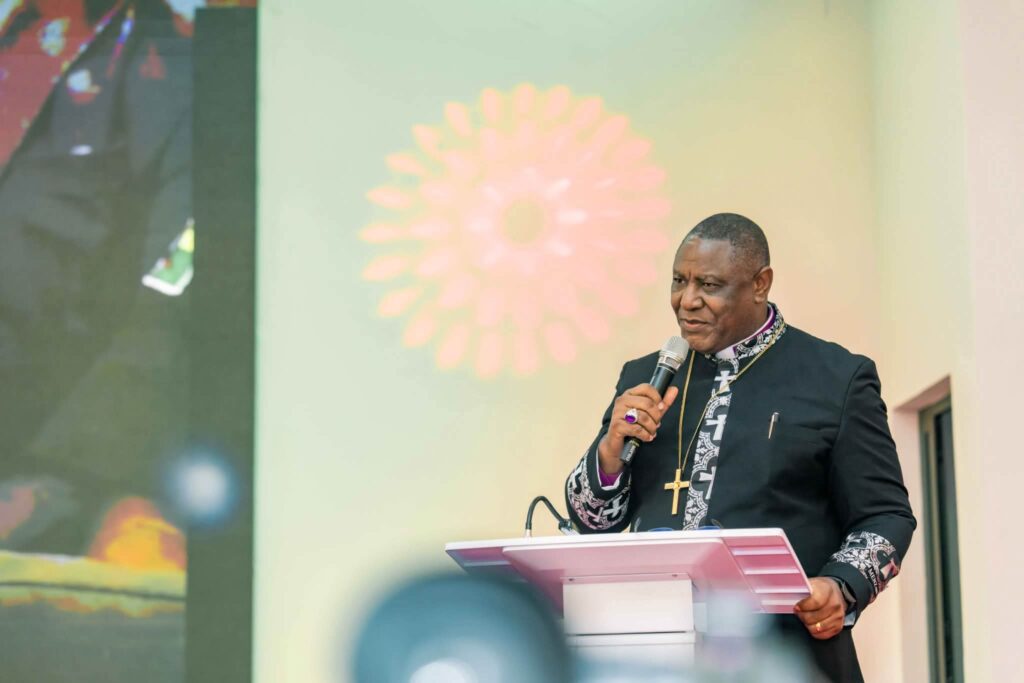
“I didn’t believe in anything that you were going to do. I didn’t vote for you in 2023. Your handlers didn’t effectively market you to us. It was after you began your work that I asked myself why I hadn’t voted for you. Now another opportunity is standing in front of me, and I didn’t have to think twice,” Bakare confessed.
For Governor Uba Sani, that confession was the real metric. He said his activism, including five detentions under military rule, and that of his friend Comrade Shehu Sani, jailed for close to five years, taught him that democracy dies when politicians instigate the children of the poor while their own children live in London, Dubai and America.
He linked peace to tangible development, noting that President Tinubu, impressed by Kaduna’s tranquility, approved $865 million for a light rail project as a pilot with Lagos and Kano, and granted the state two ministers and two new universities: Shehu Musa Yar’adua University of Geomedical Sciences and Engineering Technology in Rigachikun and Federal University of Applied Sciences in Manchok, Kachia.
He also credited his lobbying for the upgrade of the Federal College of Education, Zaria, to the Federal University of Education, and said the state’s household mapping for 360,000 out-of-school children, taken back to classrooms, and its vocational institute manual have been adopted by the Federal Ministry of Education.
The governor thanked his Commissioner of Police and the Director of the State Services for their roles. He stressed that dialogue must never imply indifference to wrongdoing and that reconciliation must respect victims and uphold accountability.
He closed with a call for prayers and a promise that the dialogue will now be held quarterly, because, as he said, when there is peace in Kaduna, there will be peace in the North and peace in Nigeria.
Suggest different headlines for the above story


