

Kaduna Launches “Back to School” Campaign to Address Out-of-School Children Crisis
From: Femi Mustapha
The Kaduna State Government has officially launched a comprehensive community sensitization and education initiative to tackle the persistent issue of out-of-school children, particularly in Northern Nigeria. This initiative is part of the Reaching Out-of-School Children (ROOSC) project, a four-year program aimed at enrolling 200,000 out-of-school children across the state.
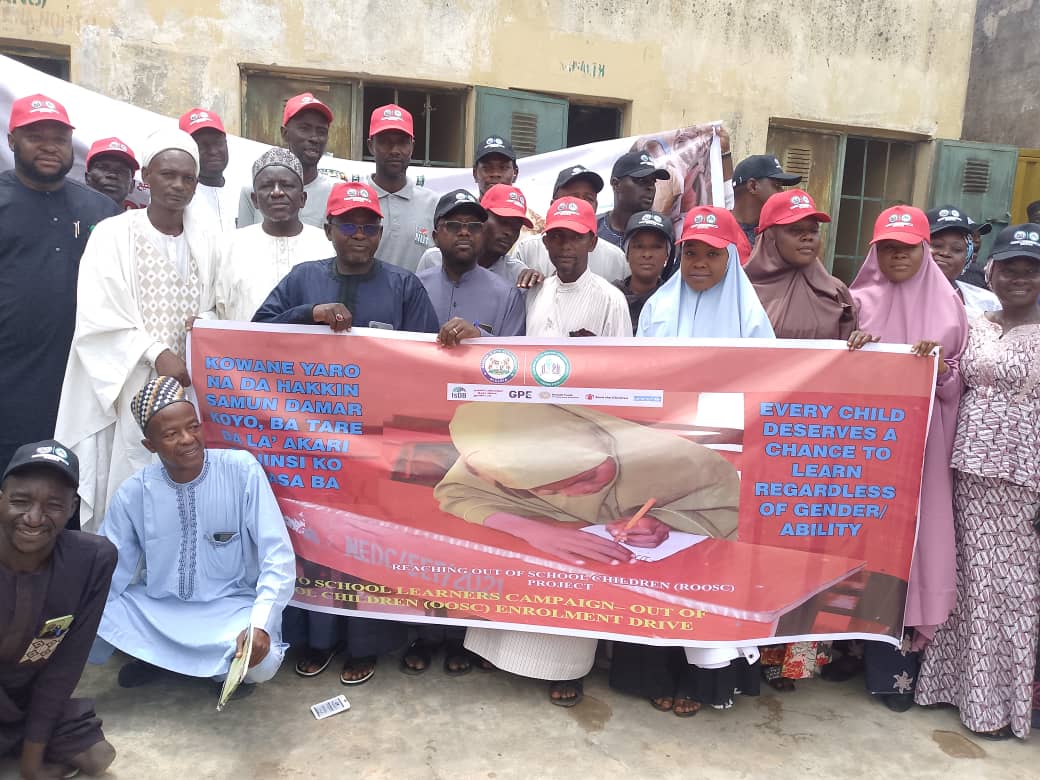
The campaign was inaugurated in the Ungwan Shanu community in the Kaduna North Local Government Area, attended by various stakeholders, including traditional leaders, religious groups, community elders, and development partners.
The project is being implemented through the Kaduna State Ministry of Education’s Project Management Unit, in collaboration with organizations such as the Islamic Development Bank, Global Partnership for Education, Education Above All, Save the Children, and UNICEF.
Ezra Angai, the ROOSC Project Coordinator in Kaduna State, explained that the project is a multi-faceted intervention designed to make quality education accessible to all children, regardless of their backgrounds, through formal and non-formal education systems.
“As part of the project, we will build 102 new schools and renovate 170 existing ones, including learning centers. The initiative also includes a strong advocacy component, such as the Back to School Campaign, to raise awareness about the importance of education,” Angie stated.
A key feature of the campaign is the Catch-Up Program, a nine-month remedial education initiative targeting children who have never been enrolled in school or have dropped out. This program offers foundational literacy, numeracy, and life skills to help reintegrate these children into mainstream education or vocational training.
During a community engagement event in Ungwan Shanu, a region identified as having a high number of out-of-school children, local support was overwhelmingly positive. Traditional heads and elders pledged their full support for the campaign.
“Our reception was heartwarming. The traditional head welcomed us, elders spoke, and there was a clear consensus: education is vital, and children must return to school,” said a representative of the campaign.
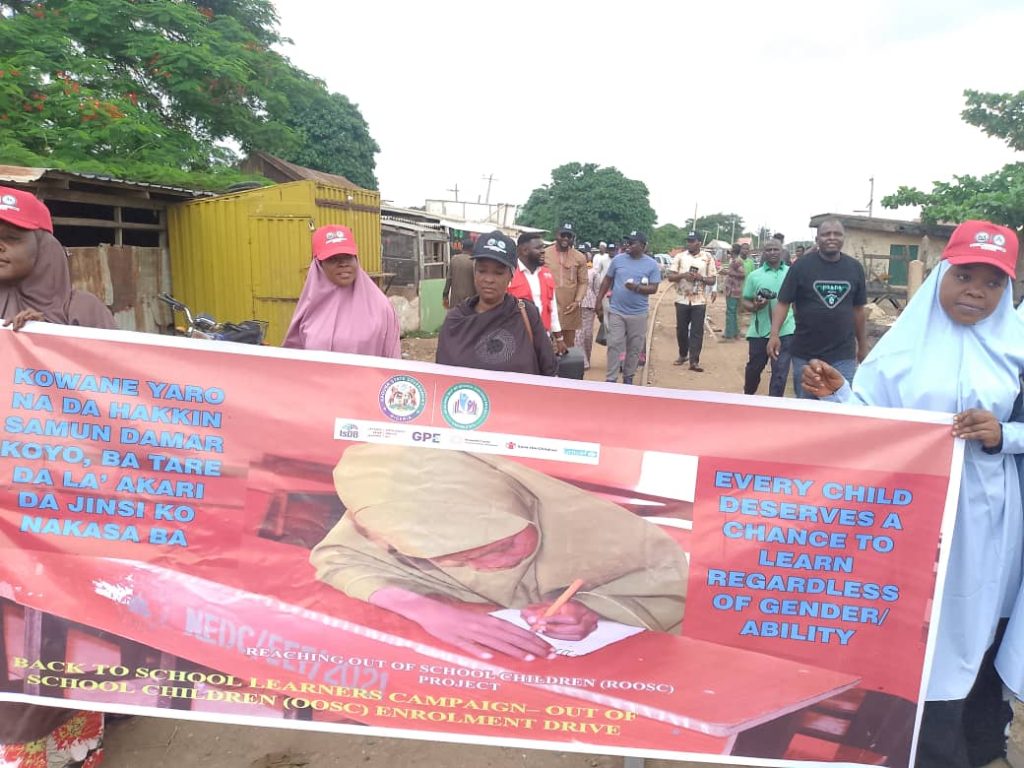
The campaign has garnered support from a wide range of stakeholders, including the Christian Association of Nigeria (CAN), Jama’atu Nasril Islam (JNI), the State Universal Basic Education Board (SUBEB), School Management Officers (SMOs), the Kaduna State Disability Board, and the Kaduna Basic Education Accountability Mechanism (KADBEAM).
Kabir Lawal, Director of the Social Mobilization Department at SUBEB, emphasized that the campaign will be a recurring activity integrated into the state’s education budget.
“In our annual budget, we have allocated funds for this type of campaign, and it will now be conducted at the beginning of every academic session,” Lawal revealed. “Beyond this, we are training School-Based Management Committees (SBMCs) and deploying Social Mobilization Officers to enhance grassroots advocacy across communities.”
Mbursa Emmanuel, the ROOSC Project Director at Save the Children Kaduna, described the Back to Learning Campaign as a success that was “largely led by the government” and well-received by communities.
“We’re very pleased with the overwhelming community support. The village head and other community leaders pledged to accommodate and assist in efforts to ensure children return to school,” Emmanuel said.
However, Emmanuel also mentioned that providing livelihood support for families—a key barrier to school attendance— is not currently included in the project. He noted that discussions are ongoing with the government and partners to explore potential solutions.
“These challenges take time and require patience, but we are hopeful that with continued engagement, more support will become available,” he added.
“This project does not currently include a livelihood component, but we’ve had extensive discussions with government officials to see how support from other organizations can be mobilized. Based on what we’ve seen so far, the government is committed, and we believe more gaps will be addressed as the project unfolds,” Emmanuel explained.
During his address, Alhaji Nura Ibrahim, the Village Head of Ungwan Shanu, stressed the need for the government to take more decisive action against poverty, which is a root cause of educational exclusion.
“Many parents simply cannot afford to send their children to school. I help where I can, even with children who are not mine, because we all rise or fall together,” he stated. “But the government must invest more. If you can’t allocate part of your resources to improving lives, what are you governing?” he questioned.
He cautioned that uneducated children are at risk of becoming societal threats due to idleness and exposure to negative influences.
“If a child cannot afford to write NECO exams, they drop out, roam the streets, and get into trouble. We need real support, including livelihood assistance, vocational training, and fee waivers, so our children have a future,” he emphasized.
Ibrahim reaffirmed the community’s willingness to support the initiative.


