

By: Femi Mustapha
Abuja, Nigeria – Stakeholders have sounded the alarm over the alarming rate of illicit financial flows in Nigeria’s solid minerals sector, calling for urgent action to address the drain on the country’s resources.
The call was made at a public presentation of a research report on the enablers of illicit financial flows in the sector, organized by the Africa Network for Environment and Economic Justice (ANEEJ) in collaboration with the Nigeria Extractive Industries Transparency Initiative (NEITI) and the Federal Ministry of Solid Minerals Development, with support from the Foreign, Commonwealth & Development Office (FCDO).
The research report revealed that Nigeria accounts for 35% of all illicit flows from Africa, with 93% of these flows occurring through the extractive industry, highlighting the need for urgent intervention.
Speaking at the event, Rev. David Ugolor, Executive Director of ANEEJ, attributed the problem to weak data systems, fragmented institutional mandates, cash-based transactions, and insufficient oversight, calling for strengthened beneficial ownership transparency, improved production-export reconciliation, enhanced inter-agency data sharing, formalization of artisanal and small-scale mining (ASM), and tighter Anti-Money Laundering/Countering the Financing of Terrorism (AML/CFT) controls.

Ugolor emphasized that illicit financial flows are not just a technical or financial problem, but represent lost revenue for development, weakened institutions, environmental destruction, and direct threats to national security.
Minister of Solid Minerals Development, Dele Alake, represented by Director (Finance & Accounts), Peluola Temitope Olusegun, stressed the need for stronger governance and transparency in the sector to address the challenges of illicit financial flows, revenue leakages, and environmental degradation.
The Minister identified weaknesses in licensing controls, opaque ownership structures, and under-declaration of mineral values as some of the factors enabling illicit financial flows, saying the Federal Government is repositioning the solid minerals sector through stronger governance, tighter regulation, improved institutional coordination, and technology-driven oversight.
Executive Secretary of NEITI, Hon. Musa Sarkin Adar, emphasized the importance of addressing illicit financial flows in the sector, calling them critical to Nigeria’s economic development, and committing to work with ANEEJ to ensure that the outcomes of the dialogue translate into concrete reforms.

Chairman of the Independent Corrupt Practices and Other Related Offences Commission (ICPC), Dr. Musa Adamu Aliyu, SAN, identified six key areas that require attention, including strengthening transparency and traceability across the solid minerals value chain, using data as an accountability tool, improving coordination among relevant institutions, prioritizing transparency on beneficial ownership, safeguarding legitimate business, and engaging communities in the fight against illicit financial flows.
Dr. Biola Shotunde, Chief Operating Officer (Law Enforcement, Support and Coordination Sector) of the Nigerian Financial Intelligence Unit (NFIU), reaffirmed her organization’s commitment to combating illicit financial flows in the solid minerals sector, emphasizing the importance of embedding Anti-Money Laundering, Counter-Terrorist Financing, and Counter-Proliferation Financing measures across the entire solid minerals value chain.

The stakeholders called for specific, implementable, and measurable reforms to address the issue, including identifying high-risk points for illicit financial flows, improving integrity and reconciliation, strengthening inter-agency coordination, and implementing transparency measures that enhance accountability.
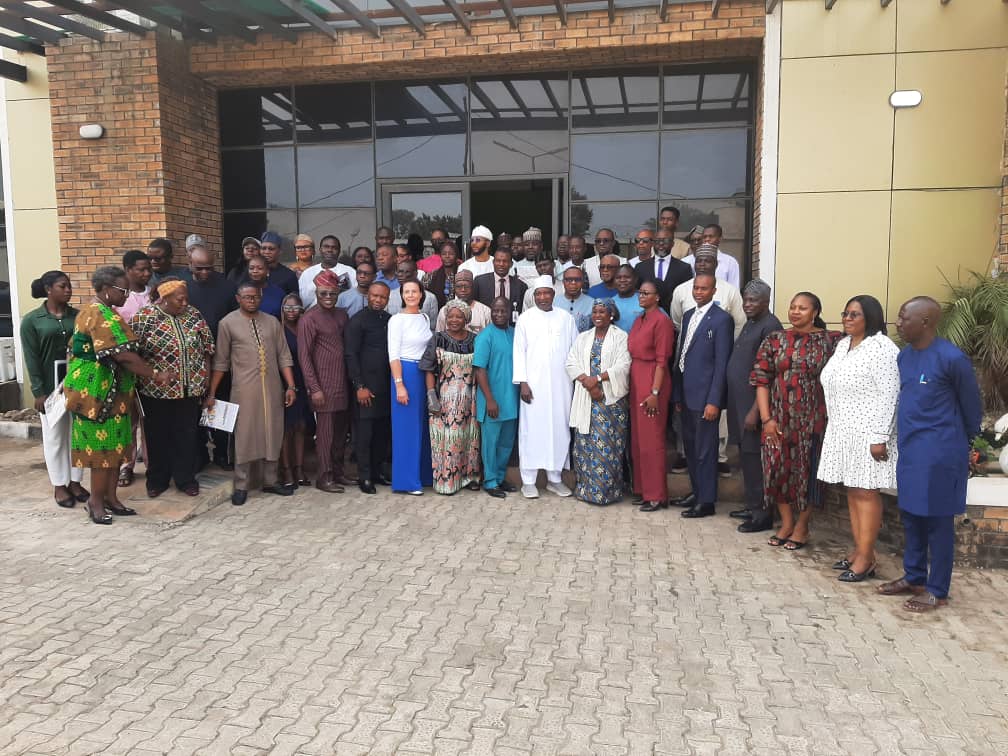
The event brought together stakeholders from government, civil society, and the private sector, providing a national platform for multi-stakeholder dialogue to identify critical policy, legal, and institutional reforms to strengthen transparency and accountability in the solid minerals sector.


