

Nutrition Stakeholders Develop Sustainable Plan for MIYCN and MMS Campaign in Kaduna
By: Femi Mustapha
Nutrition stakeholders convened in Kaduna today to develop a sustainable plan for the Maternal, Infant, and Young Child Feeding Nutrition (MIYCN) Campaign and to increase the uptake of Multiple Micronutrient Supplements (MMS). This initiative aims to build on the successes achieved through the Alive & Thrive project, which is set to conclude on August 31, 2025.
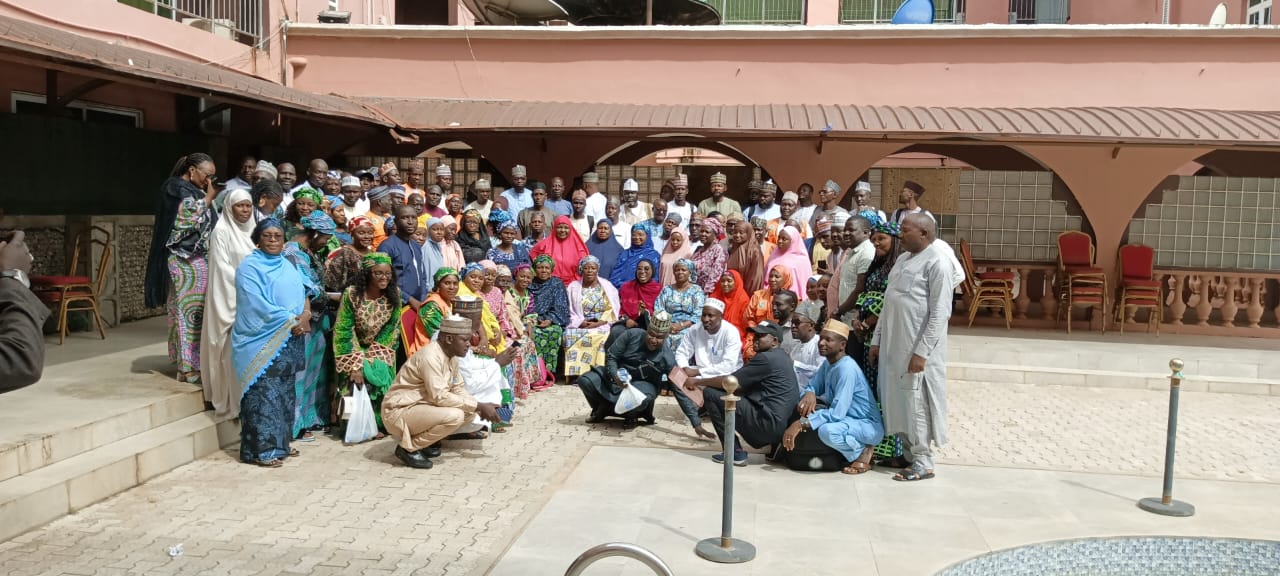
The gathering included Nutrition Focal Persons (NFPs), Monitoring and Evaluation Officers, and Health Management Information System (HMIS) officers from the 23 Local Government Areas (LGAs) of the state. Their goal was to brainstorm strategies to ensure the continuous fight against malnutrition, promote the MIYCN Campaign, and scale up the MMS initiative.
Dr. Bello Jamoh, the Executive Secretary of the Kaduna State Primary Health Care Board (KSPHCB), emphasized the importance of developing a sustainable plan that leverages local resources. He noted that effective planning is critical to avoid failure and that cooperation among teams is essential for creating a plan that will be accepted by the government, partners, and communities. The ultimate aim is to enhance health service delivery across local governments and communities.
Dr. Jamoh was represented by Hamza Ikara, the Director of Disease Control and Immunization at the KSPHCB. Ikara expressed gratitude to partners like Alive & Thrive for their support and contributions to the state government. He looked forward to continued collaboration and extended an invitation for further assistance. He also highlighted the need for cost-effective solutions and suggested that each LGA document its local production capabilities, which should be sent to the State Nutrition Officer for compilation and presentation to the state council.
Mrs. Ramatu Haruna, the State Nutrition Officer for Kaduna State, explained that the purpose of the workshop is to develop a sustainability strategy that will preserve the achievements made through the MIYCN and MMS interventions beyond the lifespan of the Alive & Thrive project. She emphasized the importance of sharing experiences, successes, and challenges during the meeting to inform future planning and decision-making, as well as to secure commitment and support from stakeholders to maintain the project’s gains.
Mrs. Haruna acknowledged that while progress often faces challenges, addressing these obstacles can lead to improved outcomes in the future. She stated that the primary goal is to ensure that the gains from the Alive & Thrive project are not lost.
In her remarks, Mrs. Sarah Kwasu, the Kaduna State Coordinator, mentioned that as part of Alive & Thrive’s mandate, the organization promotes multiple micronutrient supplements and enhances maternal, infant, and young child nutrition. She indicated that there has been a recent shift in focus towards increasing the uptake of MMS supplements.
Mrs. Kwasu highlighted the capacity-building efforts within the organization, including training Community Volunteers, Nutritional Focal Persons, and the State Nutrition Officer to achieve their objectives. The ultimate aim is to ensure every pregnant woman maintains good health and gives birth to a healthy child. She noted that while significant progress has been made, this success has been a collaborative effort. Alive & Thrive has provided support, and now the focus is on developing sustainability plans for each LGA, along with a consolidated plan for the state. This approach aims to empower stakeholders to continue interventions independently.
As the current phase of the project nears its conclusion on August 31, Alive & Thrive is committed to ensuring that stakeholders can sustain their interventions without external assistance. The organization believes that local ownership and ongoing support from state and local governments are crucial for the sustainability of the MMS initiative.
The main objective of the sustainability plan is to maintain the positive outcomes and impacts of the Alive and Thrive-led maternal, infant, and young child nutrition and MMS initiatives beyond the initial funding period. The plan will focus on essential elements such as advocacy, interpersonal communication, community mobilization, social and behavioral change, and monitoring and evaluation. It will utilize existing service delivery and community platforms, implementing strategies based on available and relevant policies.
The workshop aims to identify key activities currently funded or supported by state and local governments and to build consensus around these activities. The objectives of the meeting include discussing and documenting a sustainability strategy to ensure that the gains made through the MIYCN/MMS interventions are maintained beyond the project’s lifespan. Stakeholders will share experiences, successes, and challenges to inform future planning and decision-making, securing commitment and support to uphold the project’s benefits.
A participant, Nafisa Yusuf, the NFP of Makarfi, asserted that the gathering was crucial for strategizing ways to secure support from the LGA chairman and actively engage community volunteers already working in our area to sustain the project independently of Alive & Thrive’s assistance.
“We have been trained by Alive & Thrive on various initiatives, and we are committed to leveraging that knowledge by training more health workers. Our objective is clear: we will continue and expand our efforts to eradicate malnutrition in our LGA and contribute aggressively to the state’s overarching goals.
“We will extend the initiative to facilities that have yet to receive training, recruit more community volunteers, and distribute resources to encourage the remaining facilities to deliver their services. By taking these steps, we will make a profound and lasting impact on nutrition outcomes in our community.”
Similarly, Amodu Ojone Blessing, the Health Management Information System (HMIS) Officer of Kachia LGA, stated that after receiving capacity-building training from Alive & Thrive, he will transfer that knowledge to health workers and program officers in our LGA. This is vital to ensure that the initiatives we have implemented continue to thrive even after Alive & Thrive’s withdrawal. By preserving the capacity we have built, we will drive significant progress and create enduring change in our community.
Shehu Umar, the Monitoring and Evaluation Officer of Igabi LGA, emphasized that data is imperative in the health sector for effective planning and decision-making. To ensure the sustainability of programs like the Multiple Micronutrient Supplementation (MMS) initiative, we will train frontline health workers and nutrition officers to document data accurately.
Proper documentation is non-negotiable; it will guide decision-making and advance the quality of services in our LGA and the overall health sector. We are committed to conducting supportive supervision to ensure that service providers are equipped and using the right documentation tools. This approach will uphold the integrity of our data and ultimately drive superior health outcomes.


